
Colored Pavement Supply Project Case: 3,600-Ton Annual Contract in Luoyang, China
Case notes
This colored pavement supply project case presents our real-world large-tonnage cooperation experience. The Luoyang client required steady year-round raw material for local scenic road upgrades, and the signed framework contract reached a target volume of 3600 tons for one full calendar year. This reference demonstrates our mass-production strength and strict batch-wise quality management.
Colored Pavement Supply Project Case Background
Luoyang holds rich tourism resources and expands its scenic slow-traffic road network. Local government built batches of bike lanes, waterfront trails and tourist highway surface layers. Traditional black bitumen fails to satisfy landscape-driven visual requirements for these public routes, so the purchaser searched for reliable large-volume colored-pavement raw-material suppliers.
Core Requirements of the Contract
The buyer listed clear technical and logistical demands during the procurement preparation phase.
- Colored asphalt binder must adapt to western-Henan local climate conditions, resisting summer high-temperature softening and winter low-temperature cracking.
- A stable 3600-ton annual throughput must be guaranteed with minimal delivery delays.
- Finished pavement needs long-time color retention under strong ultraviolet sunlight.
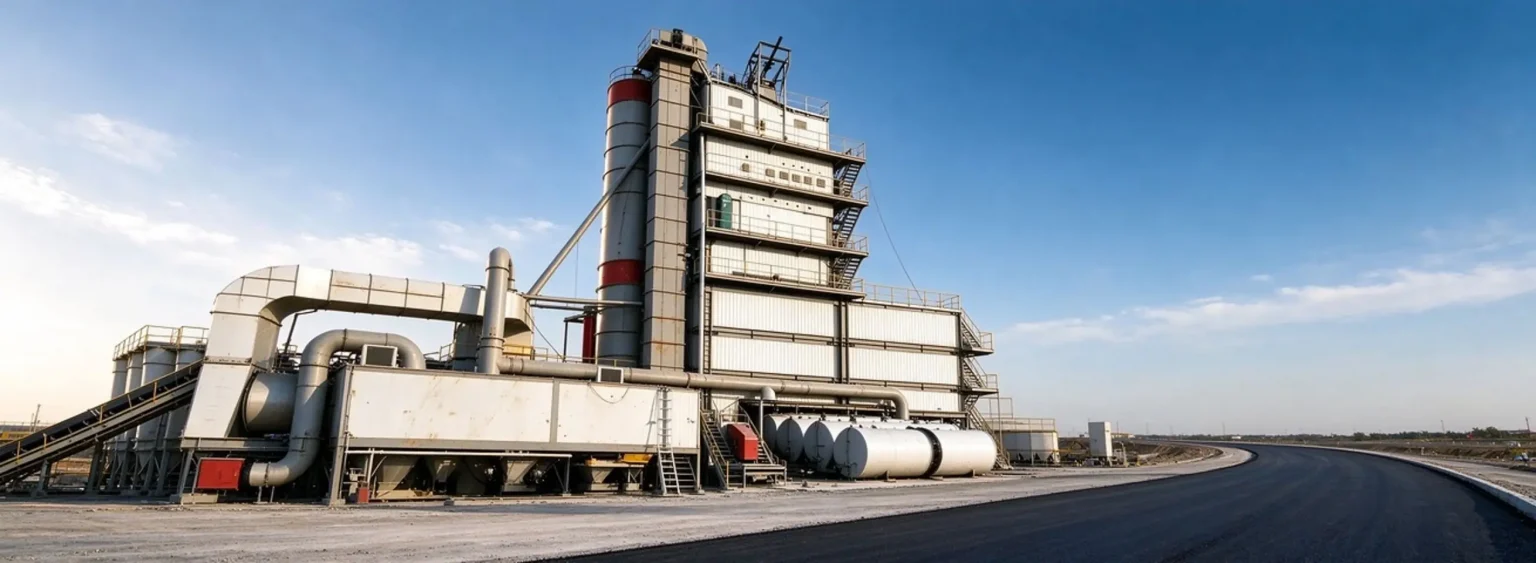
- Raw materials must match the existing local asphalt mixing-plant infrastructure.
Main Risks Within This Colored Pavement Supply Contract
Two core risks existed in the early negotiation stage of this Luoyang framework contract. The first risk was performance fluctuation brought by continuous large-batch manufacturing: mass output can shift penetration, softening point and ductility test indexes of the product. The second risk lay in batch-delivery matching irregular on-site construction schedules, because road-building activity fluctuates greatly with four-season local weather changes. Flexible warehousing and logistics were needed to respond to variable site consumption demands.
Customized Project-Oriented Solution
Our engineering team formulated adjusted material schemes for central-China climate features. Modified-grade colored asphalt binder was selected to fit Luoyang’s temperature variation range. Every finished batch went through complete laboratory inspection before truck-load dispatch. We drew up phased shipment plans aligned with the client’s staggered construction timeline, and kept a safety reserve stock inside the factory warehouse for unexpected site-material surges. Third-party inspection documents accompanied each outgoing truck-load of raw material.
Quality Control During High-Volume Production
Holding a specification is straightforward on a single batch and much harder across a year of production. The contract was therefore managed around a fixed testing rhythm rather than a final inspection. Each production batch was sampled at the plant and tested for penetration, softening point and ductility; the results were logged against the batch number so that any truck-load delivered to site could be traced back to the raw-material lot that produced it.
The pigment side received the same treatment. Because color retention depends on how evenly the inorganic pigment disperses in the binder, the recommended mixing dosage of 2.5%–3% was stated in writing and repeated in the technical guidance issued to the mixing-plant operators. Where a site batch drifted outside the agreed color range, the batch record made it possible to identify whether the cause was the binder, the pigment dosage or the mixing temperature, instead of replacing material on suspicion.
Logistics and Delivery Planning
Large-tonnage supply succeeds or fails on scheduling. Road construction in central China pauses for rain and for winter, which concentrates consumption into a few working months and leaves the rest of the year comparatively quiet. Rather than producing at a flat rate, the shipment plan was divided into phases matched to the client’s reported construction windows, with a buffer held in the warehouse against the sudden starts that occur when a weather window opens unexpectedly.
Every outgoing truck-load carried its inspection documents, so the receiving warehouse could accept material without waiting for laboratory results to be transmitted separately. That single practice removed most of the friction at the site gate and is a large part of why the contract ran without delivery disputes.
Field Material Application Status
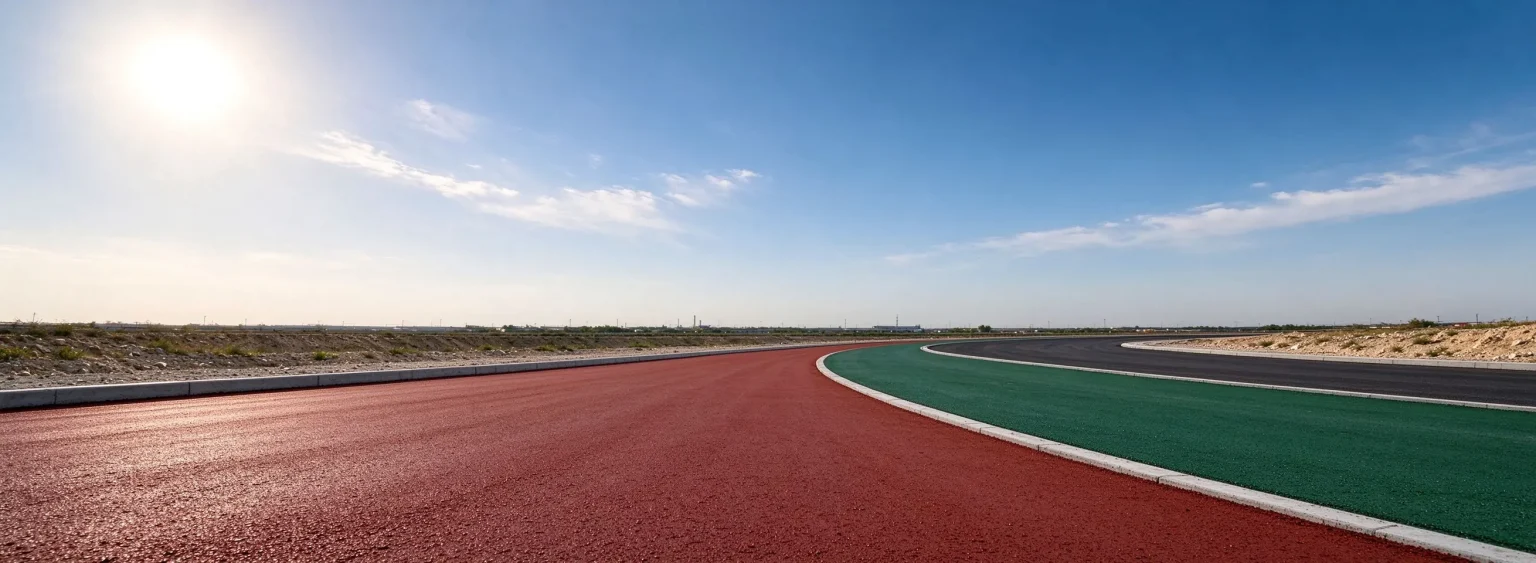
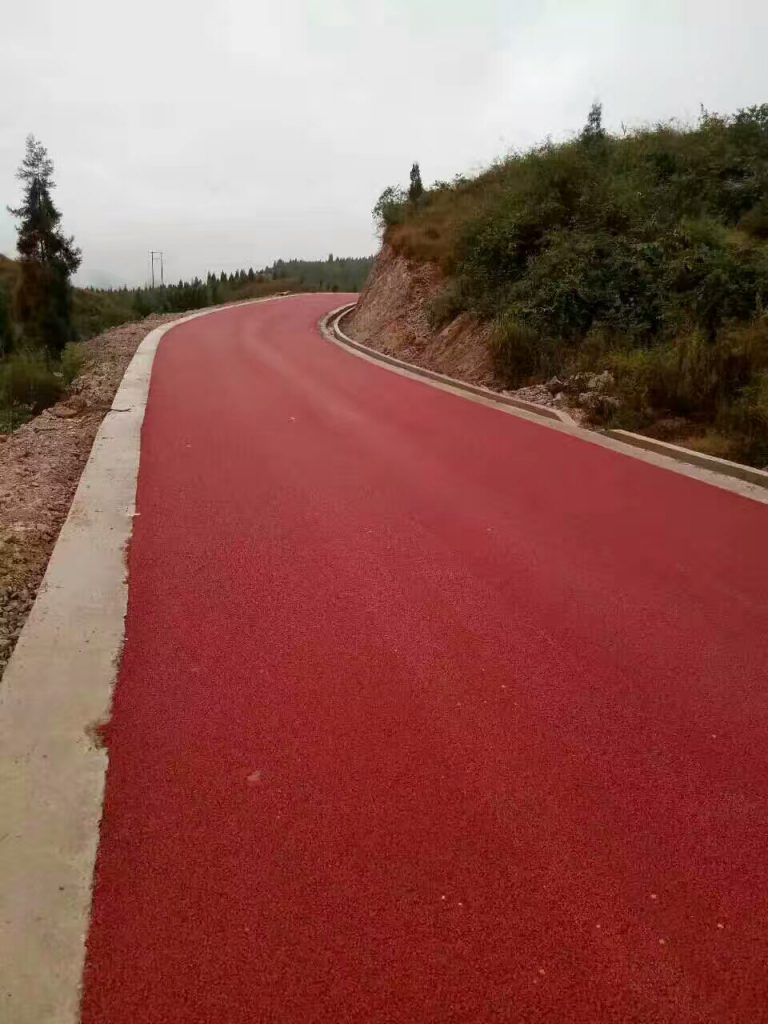
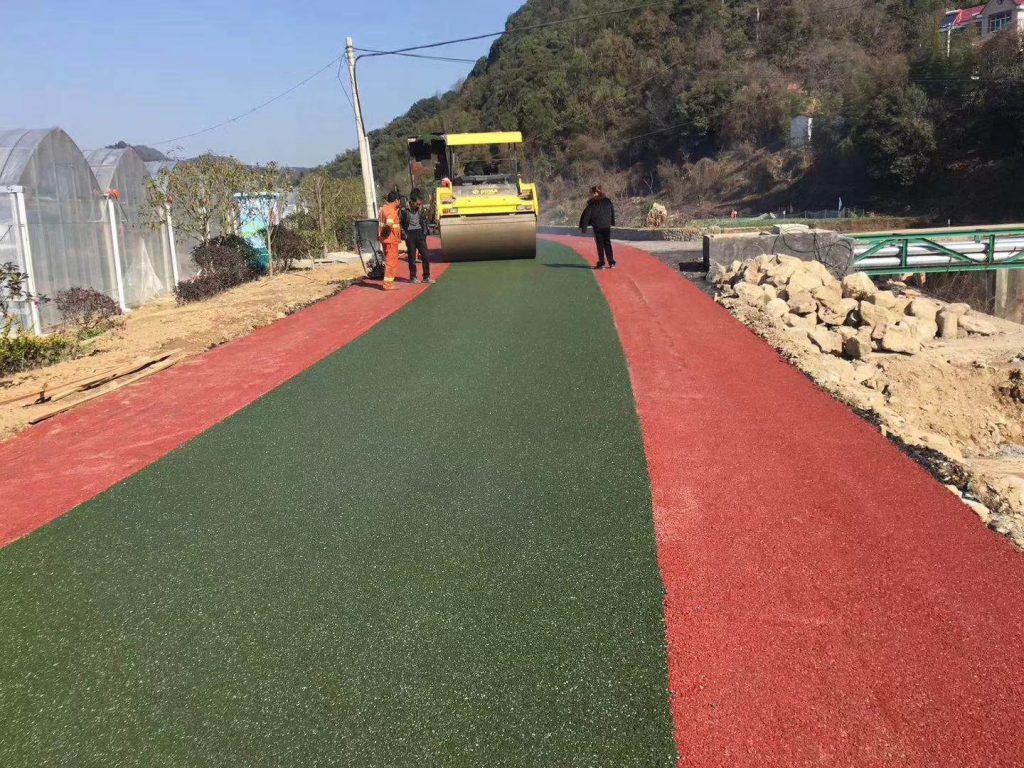
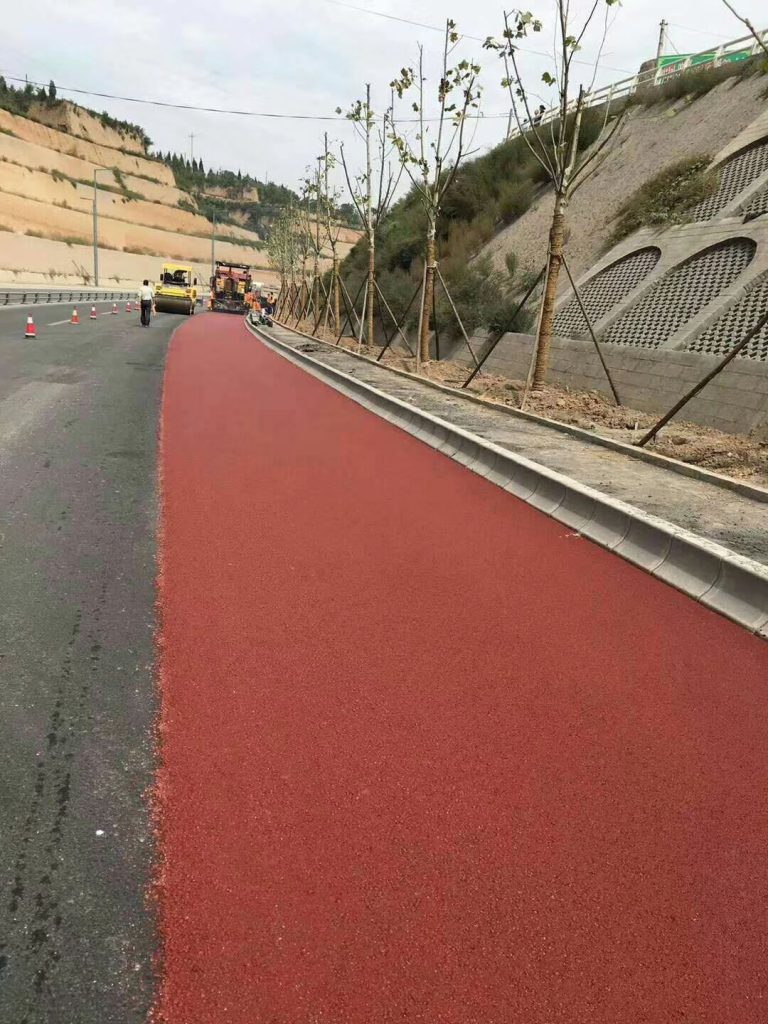
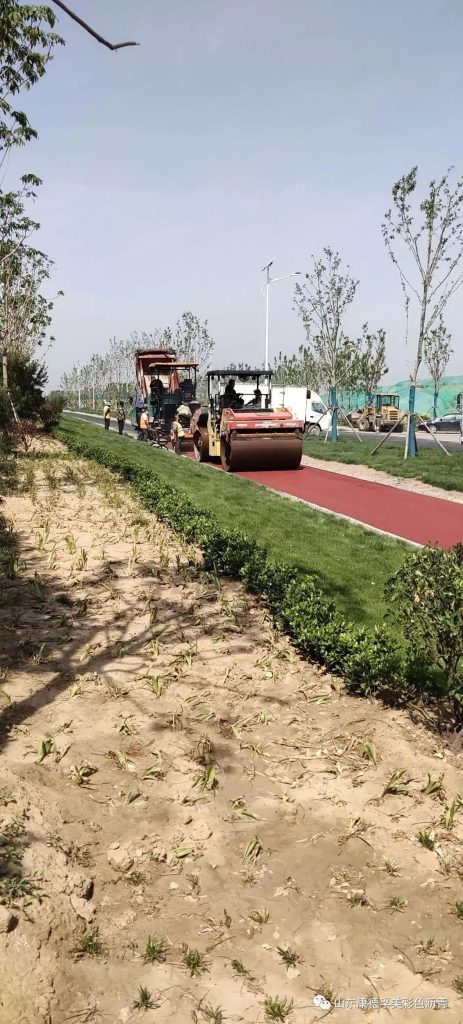
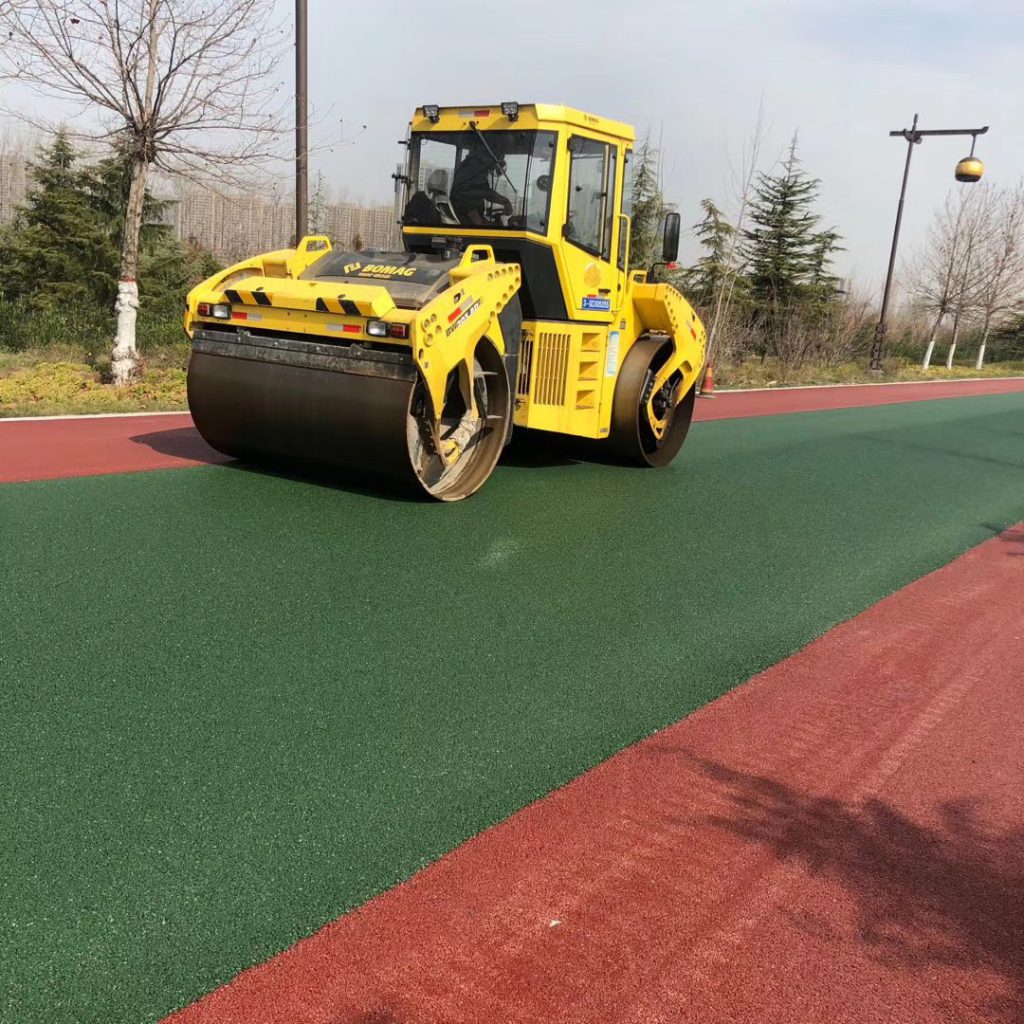
On-site crews blended colored asphalt binder with anti-fading inorganic pavement pigments. Pigment mixing dosage was strictly controlled between 2.5% and 3% as per the design specification, and mixing-plant operators followed our official technical guidance for heating parameters. Finished colored asphalt pavements were laid on tourist greenways, waterfront paths and non-motor-vehicle lanes. Spot sampling tests verified high- and low-temperature performance and anti-aging properties, and completed road sections kept a uniform color appearance in early-stage service observation.
Measurable Project Outcomes
- Actual full-year supply volume reached 3620 tons, slightly above the contracted 3600-ton target.
- Every incoming batch passed inspection tests at the client’s receiving warehouse.
- Zero critical quality complaints appeared throughout the whole framework-cooperation cycle.
- Timely segmented shipments supported smooth progress on multiple Luoyang sub-projects.
- Local road-management departments gave a positive evaluation of the finished colored pavements.
This case validates our competence for long-term, large-tonnage supply framework contracts.
Practical Takeaways From the Luoyang 3600-Ton Reference
- Supply-chain control plays a vital role in large-volume colored pavement material cooperation.
- Climate-oriented formula tuning should be finished before mass raw-material shipment to sites.
- Reserve inventory plus flexible phased shipment can offset construction-schedule uncertainty.
- Batch-by-batch laboratory testing prevents performance drift under high-volume production.
- Regular technical communication with mixing-plant teams helps achieve ideal paving results.
Applicable Project Types for This Reference
- Tourism-oriented city municipal scenic greenway network construction across China.
- Framework tender procurement for yearly bulk colored-road-building raw-material demand.
- Bundle procurement of multiple sub-projects with unified material and technical specification standards.
- Urban non-motor-lane renovation pursuing durable decorative pavement visual performance.
- Tourist-highway surface renewal with strict landscape-aesthetic assessment requirements.
If you are planning a similar large-tonnage annual-supply project, feel free to reach our team. We can deliver a custom formulation proposal and a practical logistics scheme for your tender work.
Further Reading
For general industry background, see the Asphalt Institute and the Federal Highway Administration asphalt pavement recycling programme. These are independent, non-commercial references and are not connected with LIJIU.
Related Equipment and Guides
Project Images


Standards and references
Specifications on this page follow European Asphalt Pavement Association — Industry standards. Ask us for the full test report when you request a quote.
Related cases
RELATED CASES

Red Colored Asphalt for Ethiopia — 280 t Binder and 140 t Iron Oxide Red Delivered Ex-Works
In mid-October, a full lo...
VIEW CASE
AF-BOX 3C6N Foaming Retrofit at Hengshui Mixing Plant
AF-BOX Foaming Retrofit |...
VIEW CASE
AF-BOX Foaming Upgrade at Henan Haoyu Mixing Plant
AF-BOX Plant Upgrade | He...
VIEW CASE