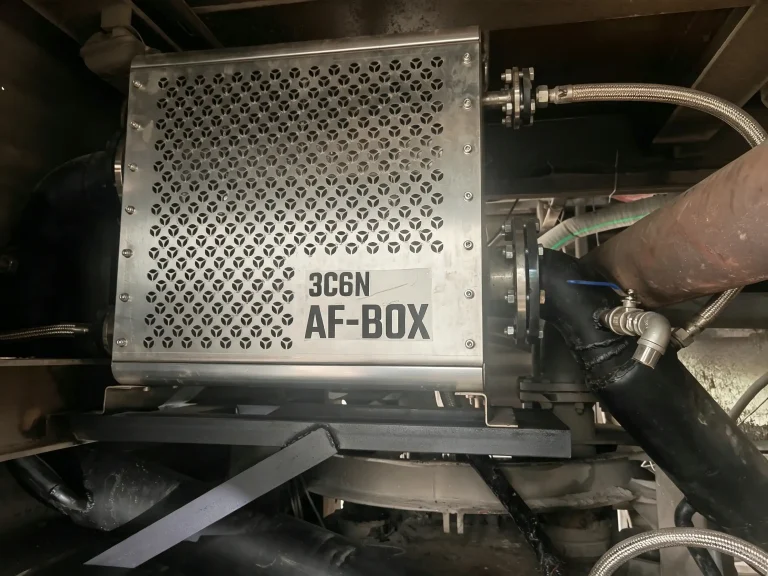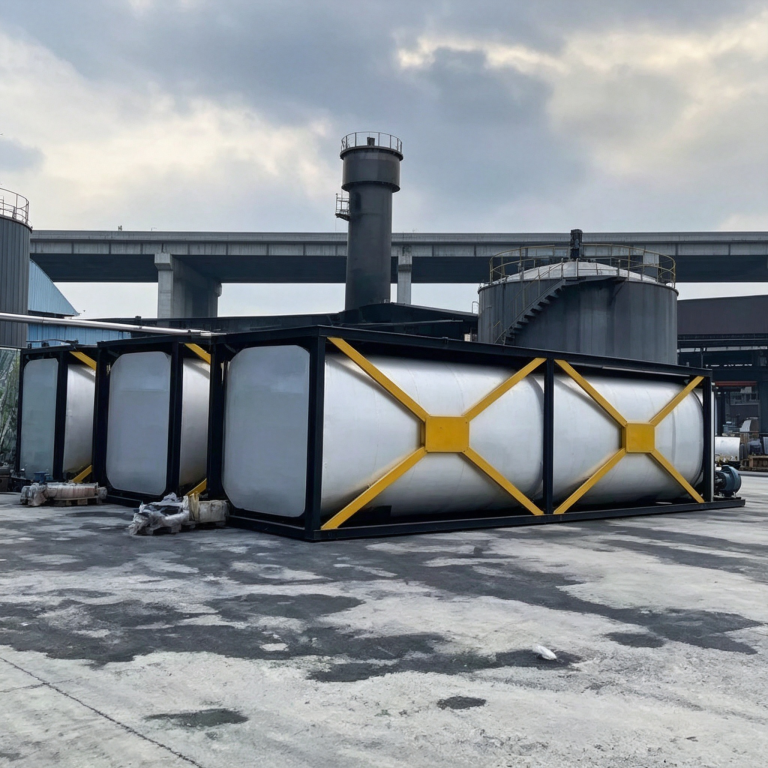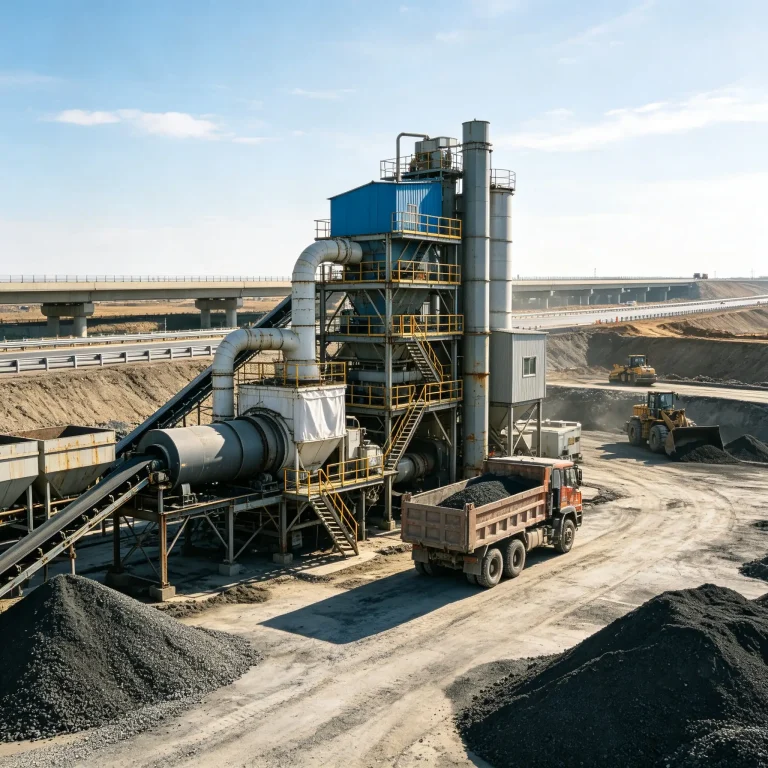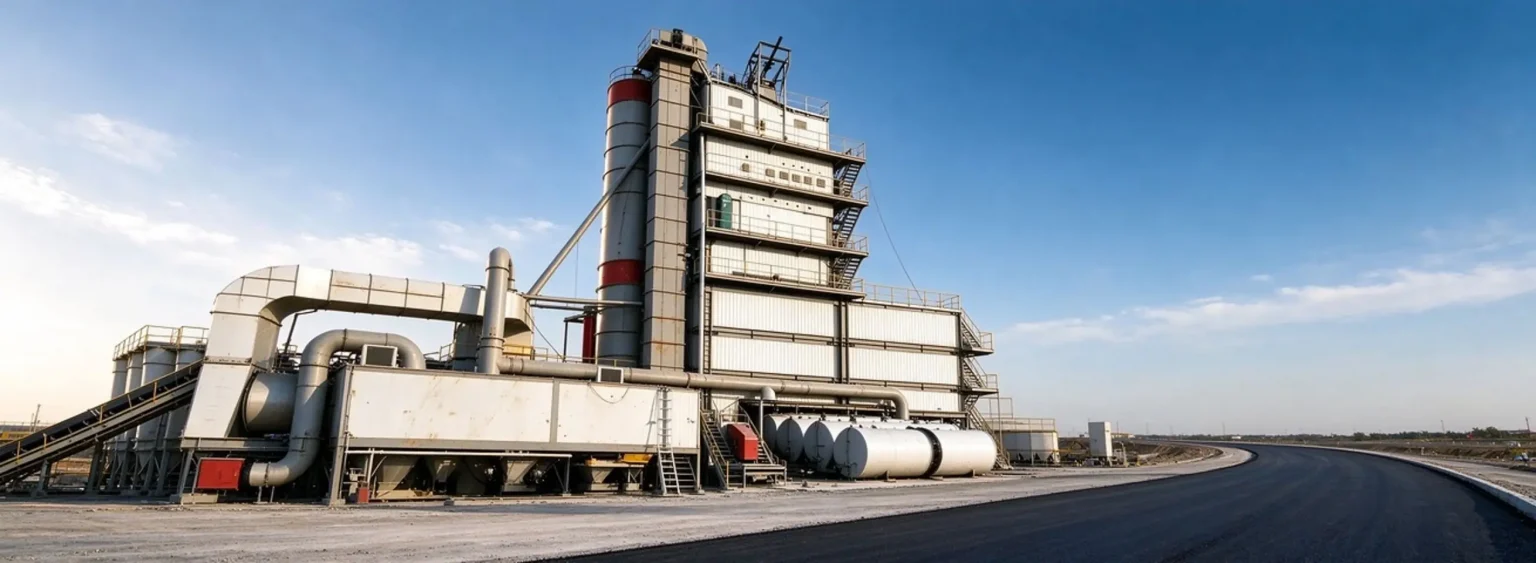
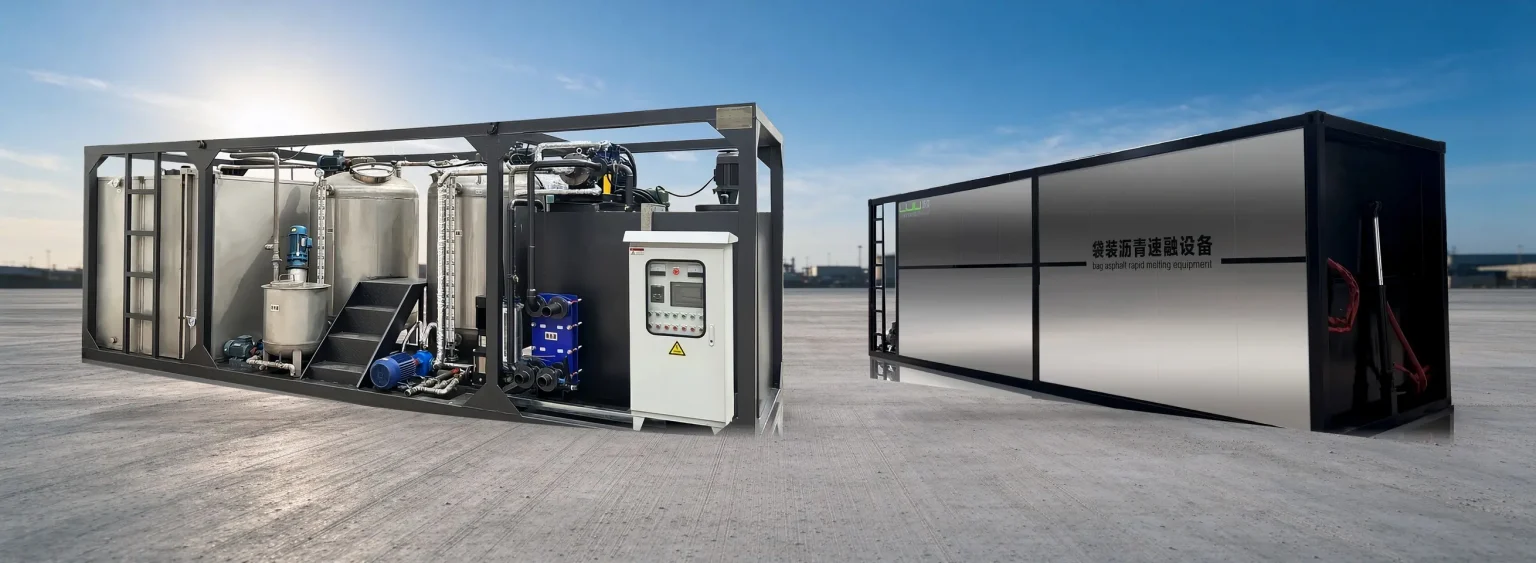

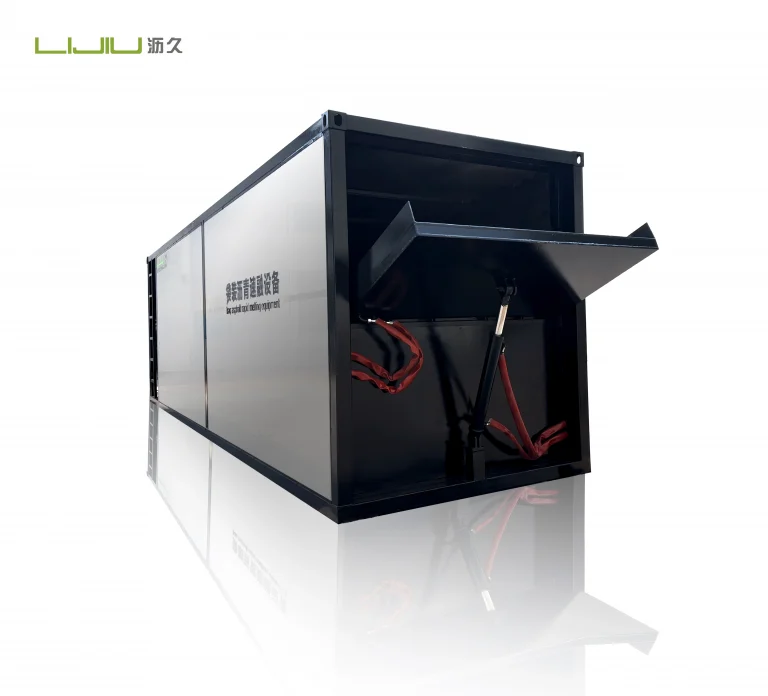
This bagged asphalt melting equipment maintenance guide covers the daily routines for heating, thermal oil and melting chamber operation that keep a bag-fed unit feeding clean molten binder to the plant every shift. A bagged asphalt melting equipment maintenance log also records burner hours, thermal-oil temperature and bag residue, which are the three numbers that tell you when to service the unit.
Bagged Asphalt Melting Equipment Maintenance: Overview
The schedule below suits a bag-fed melting unit with a melt tank, thermal-oil heating circuit, bag residue screen, bitumen transfer pump and over-temperature protection. Plants that receive barrel packaging as well as bags should extend the feeding system check to both formats every day.
Daily Checks
- Inspect heating temperature and thermal oil level
- Check melt tank level and bitumen flow
- Clean bag residue and filter screens
- Inspect the feeding mechanism for jams
Heating System
- Check thermal oil level and quality monthly
- Inspect heating elements and coils for leaks
- Verify temperature sensors and over-temperature protection
- Never run the heater without bitumen
Filter and Pump
- Clean or replace bag residue filters daily
- Inspect the bitumen pump for wear and leakage
- Check valves and pipelines for blockage
- Flush lines when switching grades
Monthly Checks
- Inspect insulation and safety guards
- Lubricate mechanical moving parts
- Check electrical connections
- Test emergency shutoff
Common Faults
- Slow melting — check heating elements and thermal oil temperature
- Material loss on bags — inspect mesh and temperature uniformity
- Pump blockage — clean filters and flush lines
LIJIU Tip
Keep the melt tank clean and the filters clear every day. A blocked filter or a cold heater costs more time than a daily 10-minute check.
Safety and Record Keeping
Confirm emergency stop and over-temperature protection work before each start, and keep the melt tank area clear of flammable packing material. After melting, drain residual bitumen and flush lines according to the manufacturer’s procedure so cold-start heating is not overloaded. Record heating time, temperature and thermal-oil levels daily; sudden increases in heating time indicate insulation or burner wear. Keep spare temperature sensors, thermal-oil filters and nozzle kits available, and schedule an annual burner service with the equipment supplier.
Using the Daily Log as a Diagnostic Tool
Keep the checklists visible at the control panel for quick reference by every shift, and keep a simple daily log of heating time, melting volume and thermal-oil temperature. Compare the numbers at the end of each week: a gradual rise in heating time usually signals burner fouling or insulation wear before a breakdown happens. On sites that reuse the molten binder for emulsion production, the same log feeds the maintenance schedule for the emulsified asphalt equipment next in line, and for asphalt mixing plants the wear points are covered in the asphalt mixing plant maintenance guide.
Filter and Screen Maintenance in Detail
The residue screen is the component that decides how much bitumen you lose on every bag, and it is also the one most often neglected because cleaning it is unpleasant work. Treat it as a production item rather than a housekeeping item: a screen that is partially blinded forces the melt tank to run hotter, slows the melt rate and eventually carries bag fibre through to the transfer pump.
Inspect the screen at the start and end of every shift and clean it with a scraper rather than by tapping it against the frame, which distorts the mesh. Keep two screens so one can soak while the other is in service. Replace rather than repair a screen once the mesh is distorted, because a distorted mesh lets residue through in one place while blinding in another, which makes the residue rate unpredictable.
Thermal-Oil System Care
The thermal-oil circuit is the heart of a melting unit, and its condition is best judged from records rather than from a single reading. Check the oil level daily and the oil quality monthly, noting colour and, where possible, sampling for viscosity and acidity. Oil that has darkened and thickened transfers heat less efficiently, which shows up first as a longer melting time and later as an inability to reach working temperature at all.
Keep the thermal-oil filter on the same replacement cycle as the burner filter, because a loaded oil filter produces exactly the symptoms of a failing heater. Check the expansion tank level when the system is cold, not hot, so that the reading is comparable from one week to the next. Finally, confirm the over-temperature trip works by testing it deliberately during a planned shutdown rather than discovering it during an incident. The thermal-oil loop is often shared with an emulsified asphalt plant or a modified asphalt line, in which case its condition affects every product on the site.
Operator Training Points
- Never run the heater without bitumen in the melt chamber — a dry heater scorches the oil and can crack the coil.
- Load bags at a steady rate — overloading the feeder causes jams that take longer to clear than the extra output is worth.
- Watch the melting time, not just the temperature — a rise in melting time is the earliest warning of burner or insulation wear.
- Shut down in the correct order — transfer pump first, then the heater, then the feed.
- Record every stoppage — the reason matters more than the duration when the next maintenance review happens.
Integrating the Melter with the Rest of the Site
A bagged asphalt melting unit is usually one station in a longer process, so its maintenance should not be planned in isolation. Molten bitumen from the melter may feed a mixer directly, or it may feed a bitumen emulsion plant or a polymer-modified bitumen line. In each case the buffer capacity between the melter and the next process decides how much maintenance can be done without stopping production.
Where a buffer tank exists, schedule the melter’s deeper services — screen replacement, burner cleaning, thermal-oil filter change — for the window when the buffer is full. Where no buffer exists, plan those jobs for a production gap and tell the downstream operator in advance. Documenting the interface in the daily log is the simplest way to make the whole site predictable, and it costs nothing to maintain.
Further Reading
For general industry background, see the Asphalt Institute and the Federal Highway Administration asphalt pavement recycling programme. These are independent, non-commercial references and are not connected with LIJIU.
Related Equipment and Guides
Reference Images


Standards and references
Specifications on this page follow ASTM D6927 Standard Test Method for Marshall Stability. Ask us for the full test report when you request a quote.