

A well-maintained asphalt mixing plant runs more efficiently, produces consistent mix and avoids costly unexpected downtime. This asphalt mixing plant maintenance guide covers the daily, weekly and monthly checks that keep your batch plant running reliably. Following an asphalt mixing plant maintenance schedule also protects the hot elevator, dryer flame and bag-house between seasonal campaigns.
Asphalt Mixing Plant Maintenance: Overview and Configuration
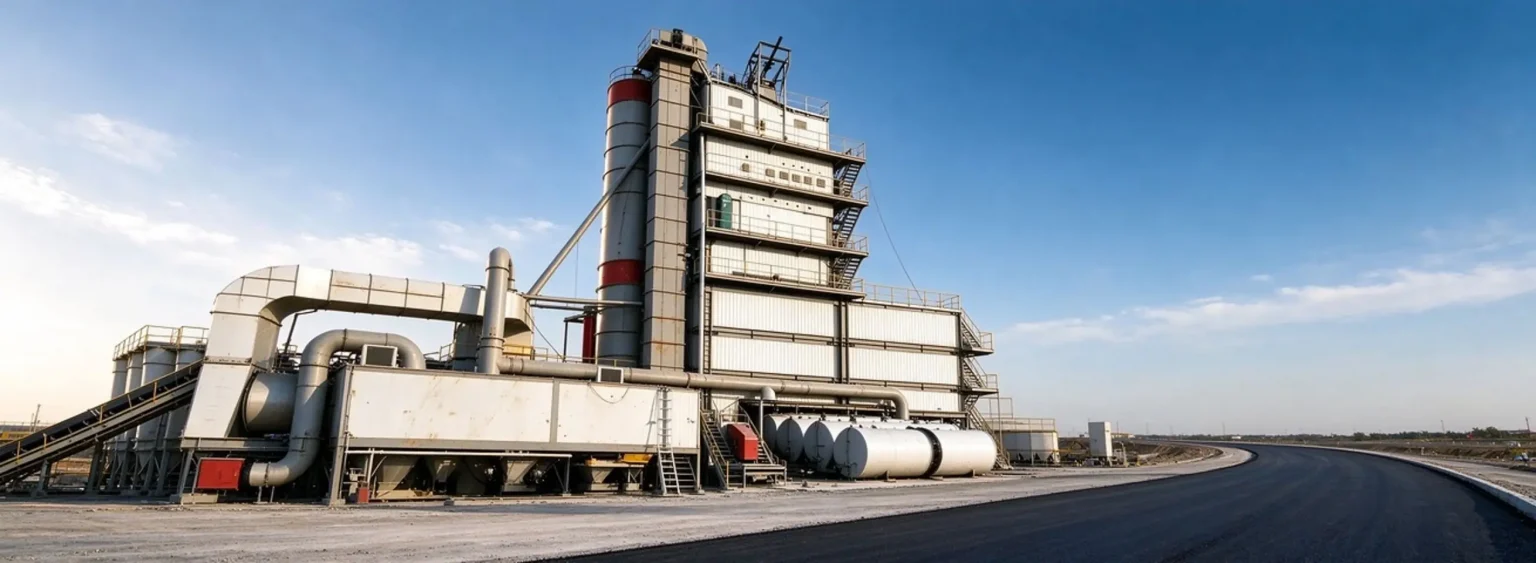
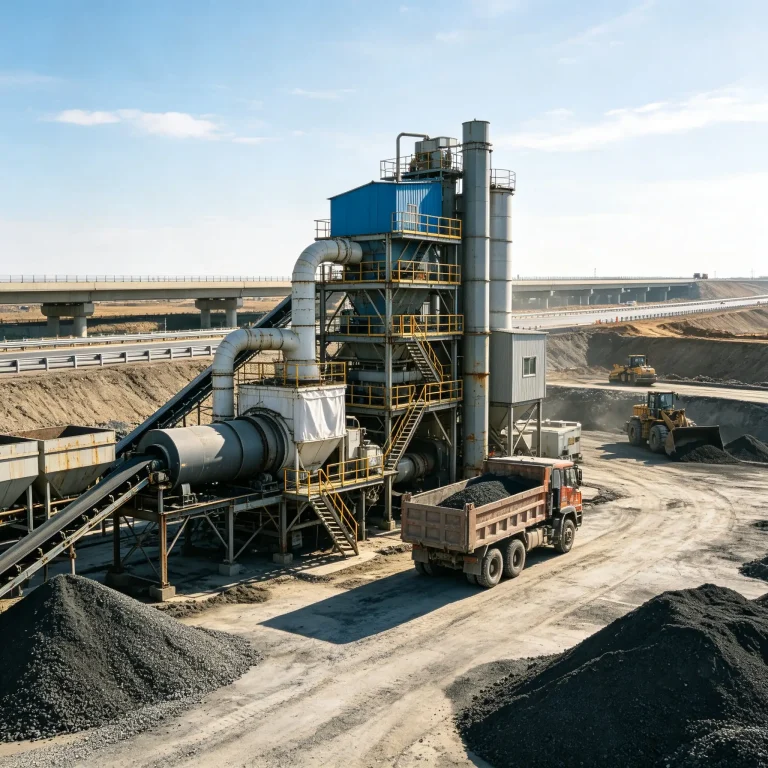
The schedule below suits a conventional batch plant with a drying drum, burner, screening unit, hot aggregate bins, weighing hoppers, mixer and dust collector. Intervals should be adjusted to the plant’s duty cycle: a plant running two shifts on abrasive aggregate needs checks at the shorter end of each window, while a single-shift plant on clean material can follow the standard intervals.
Daily Checks
- Inspect burners, flame and fuel supply
- Check aggregate belts for alignment and wear
- Clean screens and remove build-up
- Check lubrication points and oil levels
- Verify burner filters and dust collector
Weekly Checks
- Inspect wear parts: mixer paddles, liner plates, burner nozzles
- Check belt tension and tracking
- Inspect pneumatic and hydraulic systems for leaks
- Test safety interlocks and alarms
Monthly Checks
- Calibrate weighing systems
- Inspect gear reducers and replace lubricant if needed
- Check dust collector bags or cartridges
- Tighten all structural bolts
- Review electrical connections and control panel
Common Faults and Their Causes
- Uneven mix — check screens, weighing calibration and burner temperature
- High fuel consumption — clean burner nozzles, check flame sensor
- Dust leakage — inspect collector bags and seals
LIJIU Tip
Follow the manufacturer’s lubrication schedule, keep spare wear parts on hand, and train operators to report small issues early. A 30-minute daily check prevents major breakdowns.
Building a Maintenance Log That Actually Works
Keep a maintenance log for every major component — burner, drying drum, mixing tower, control cabinet and pneumatic valves. Record service dates, replaced parts and operating hours so the next check follows a clear schedule rather than memory. Train at least two operators on the daily check routine so a single absence never stops the plant. For plants running two shifts, review the weekly checklist monthly and confirm that wear items such as liners, paddles and spray nozzles are inspected within their service window.
Planning a Major Overhaul
For plants planning a major overhaul, review the burner, drying drum and dust-collection system against the manufacturer’s service manual, and confirm the contractor or in-house team follows the same checklist discipline. Document any deviation and its reason so the next overhaul starts from accurate records. The equipment this schedule is written for is the GLB60 asphalt mixing plant and the GLB30 asphalt mixing plant; both share the same wear-part logic, so one checklist covers the range.
Spare Parts Worth Keeping on the Shelf
Downtime on a batch plant is almost always a parts problem rather than a repair problem. The parts that stop production most often are also the cheapest to stock, so a modest shelf inventory removes most of the risk from the schedule above.
- Burner nozzle and flame sensor
- Mixer paddles and liner plates
- Screening mesh panels for the sizes you run most
- Dust collector bags or cartridges
- Belt splice kits and idler rollers
- Pneumatic solenoid valves and cylinders
- Load-cell spares for the aggregate and filler scales
- Thermocouple and temperature transmitter
Review the list once a quarter against your maintenance log. Any item that has been consumed twice in a quarter belongs permanently on the shelf, and any item untouched for a year can be dropped.
Repair or Replace? A Practical Rule
Operators often keep a worn component running long past the point where it is economic. Use three questions before deciding. First, is the wear affecting product quality — mix uniformity, temperature stability or weighing accuracy? If yes, replace it. Second, is the part now being replaced more often than the manufacturer’s interval? If yes, look for the root cause before buying another one. Third, does the repair cost exceed roughly half the price of a new component while restoring less than half its service life? If so, replace.
Applying the rule to the wear items above keeps the plant predictable. Mixer paddles and liners are a straight wear calculation and should be replaced on measured thickness rather than on feel. Screens are replaced when the mesh is distorted, because a distorted screen passes oversize material and shows up later as an uneven mix. Dust collector bags are replaced when differential pressure across the collector rises beyond the normal band at the same production rate.
Safety Checks Before Each Shift
Maintenance and safety share the same walk-around. Before starting, confirm that guards on belts, couplings and the mixer drive are in place; that the emergency stop and the burner flame-failure interlock both trip correctly; that there is no bitumen or fuel leakage under the tank and burner area; and that the dust collector discharge and the filler silo vents are clear. Record the result of the interlock test, because an interlock that is not tested is an interlock that is not there.
Lock-out procedure matters as much as the checks themselves. Whenever a guard is removed for inspection, isolate the drive and confirm zero energy before reaching in, and keep the key with the person doing the work. A plant that runs three shifts should also assign one named person per shift as responsible for the daily checklist, so the log is signed rather than assumed.
Extending the Schedule to Ancillary Equipment
The main plant is only part of the site. Filler silos, bitumen tanks, the thermal-oil heater and the loading area all carry their own wear points, and a failure in any of them stops the same production line. Bitumen tanks need their level and temperature instruments verified monthly and their heating coils inspected for internal leakage. The thermal-oil heater needs its filter and burner cleaned on the same cycle as the main burner, and the oil itself should be sampled periodically for acidity and viscosity because degraded thermal oil causes exactly the uneven heating that shows up as a temperature fault at the mixer.
Loading and storage areas deserve a place in the schedule too. Keep stockpile boundaries separated so aggregate sizes do not mix, and check that the loader operator is not pushing material across a boundary. When cold-recycling or warm-mix work is added to a plant’s workload, the ancillary list grows: a foaming unit and a rejuvenator dosing system each bring their own nozzle, pump and instrument checks, and they should be written into the same weekly sheet rather than kept as a separate system of record.
Further Reading
For general industry background, see the Asphalt Institute and the Federal Highway Administration asphalt pavement recycling programme. These are independent, non-commercial references and are not connected with LIJIU.
Related Equipment and Guides
Reference Images


Standards and references
Specifications on this page follow ASTM D6927 Standard Test Method for Marshall Stability. Ask us for the full test report when you request a quote.