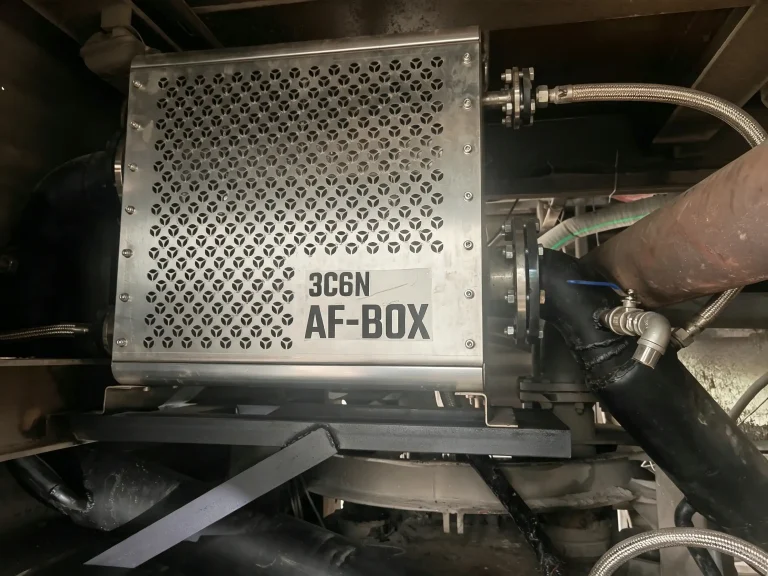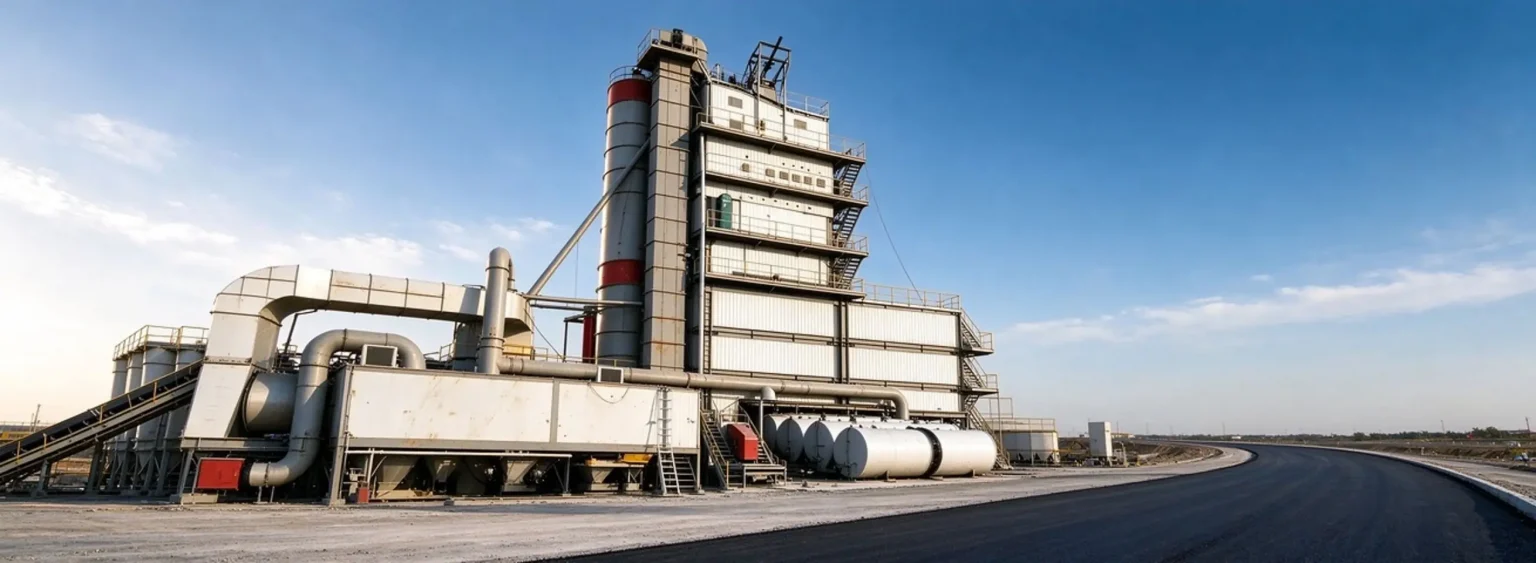



This SBS equipment maintenance guide covers the checks that keep a modified asphalt plant stable during continuous production, from the colloid mill through the development tank to the thermal-oil system. Without a defined SBS equipment maintenance routine, polymer residue builds up in the colloid mill and heat exchanger. A defined SBS equipment maintenance routine also protects the development tank agitator and the thermal-oil pump seals.
SBS Equipment Maintenance: Overview and Configuration
The schedule below suits a polymer-modified bitumen line with an SBS feeding system and screw conveyor, a high-shear colloid mill, one or more heated development tanks with agitators, and a thermal-oil heating loop. Plants that run multi-grade production should treat every recipe change as a trigger for the mill and dosing checks, not only the calendar.
Daily Checks
- Inspect SBS feeding system and screw conveyor
- Check colloid mill temperature and pressure
- Verify development tank agitation and heating
- Flush pipelines after production
Colloid Mill Maintenance
- Inspect rotor and stator wear every 200–400 operating hours
- Adjust gap for consistent SBS shearing
- Lubricate bearings per schedule
- Never run the mill dry
Development Tank and Storage
- Check agitator gearbox oil
- Inspect heating coils for leaks
- Clean the tank bottom to prevent settled polymer build-up
- Verify level sensors
Monthly Checks
- Calibrate SBS and bitumen dosing
- Inspect pumps, valves and seals
- Check the thermal oil system
- Test PLC alarms and safety interlocks
Common Faults
- Unstable SBS content — check feeder calibration and mill gap
- Pressure fluctuation — inspect filters and pump wear
- Material segregation — check agitator and tank temperature
LIJIU Tip
SBS residue hardens fast. Flush the mill and lines immediately after each batch, and keep spare mill parts in stock to avoid long shutdowns.
Shift Handover and Record Keeping
Keep detailed service records for the colloid mill, development tank, heat exchanger and control system, and review them before each scheduled maintenance window. Train shift operators to recognise early signs of SBS coking, uneven temperature or abnormal vibration, and to stop and report before damage spreads. For plants that run modified bitumen regularly, confirm the spare-parts kit covers mill liners, rotor seals, gaskets and temperature sensors. A consistent weekly inspection is the most reliable way to keep a PMB plant profitable.
Include the completed checklists in your handover documents so every shift starts from the same baseline. Prepare a written handover for every shift covering tank temperature, mill condition, batch count and any pending repairs. This short report keeps the night shift on the same baseline and prevents small issues from becoming costly downtime. Where the same site also runs emulsified asphalt equipment or a bagged bitumen melting unit, note the shared thermal-oil condition in the same handover so both plants are serviced on one schedule.
Preventive Maintenance Schedule for a PMB Plant
Modified bitumen production punishes inconsistent maintenance more than plain bitumen does, because polymer that is not fully dispersed will settle somewhere in the circuit and stay there. Spreading the work across the week keeps every component inside its service window.
- Every shift: check SBS feed and screw conveyor, note mill temperature and pressure, confirm tank agitation and flush lines after production.
- Every week: inspect mill rotor and stator, check agitator gearbox oil, verify level and temperature instruments.
- Every month: calibrate SBS and bitumen dosing, inspect pumps, valves and seals, test PLC alarms and safety interlocks.
- Every quarter: inspect heating coils for leakage, clean tank bottoms, and check the thermal-oil condition.
Polymer-Related Problems and How to Recognise Them Early
Most PMB faults are traceable to four causes: under-dispersed polymer, over-sheared polymer, thermal ageing and moisture. Under-dispersion shows up as a grainy surface on a cooled sample and as lower elastic recovery than the recipe predicts. Over-shearing raises the temperature in the mill and degrades the polymer chain, which shows as a binder that looks correct at production but separates during storage.
Thermal ageing accumulates every time the binder is re-heated, so the storage routine matters as much as the production routine. Moisture is the most easily missed cause: SBS stored in a damp area or fed from an uncovered hopper will foam in the mill and give a low, unstable polymer content. Check the feed hopper cover as part of the daily routine rather than only when a batch fails.
Wear Parts Inventory for an SBS Line
The mill dominates the spare-parts list, and for good reason: rotor and stator sets, shaft seals, bearing sets and the gap adjustment mechanism are all consumed at a rate that depends on how abrasive the modifier and the base binder are. Beyond the mill, keep agitator shaft seals, tank level sensors, temperature sensors for both the bitumen and the thermal oil, and the dosing screw flights for the modifier feeder.
Two items deserve special mention. First, the development tank agitator seal — a slow leak lets polymer-modified binder into the gearbox, which turns a cheap seal into a gearbox replacement. Second, the thermal-oil filter element, which is inexpensive but, when blocked, produces exactly the uneven heating that shows up as an unstable batch. Stock both.
Sampling and Quality Records
A PMB plant that samples every batch has a maintenance programme as well as a quality programme, because the sample results reveal component drift long before a failure. Record softening point, penetration and elastic recovery for each batch, and plot them against time rather than filing them as isolated sheets. A slow downward drift in elastic recovery with a stable polymer dose usually means the mill gap has opened; a sudden change in softening point with a stable dose usually means a temperature or dosing problem.
Keep the samples themselves for a defined retention period so that a customer query can be answered with a physical reference rather than a record alone. Where the same site produces emulsion as well, cross-check the two records: an unexpected rise in emulsifier consumption often traces back to a change in the modified binder being fed into the emulsion plant, not to the emulsion recipe itself.
Further Reading
For general industry background, see the Asphalt Institute and the Federal Highway Administration asphalt pavement recycling programme. These are independent, non-commercial references and are not connected with LIJIU.
Related Equipment and Guides
Reference Images

Standards and references
Specifications on this page follow European Asphalt Pavement Association — Industry standards. Ask us for the full test report when you request a quote.