
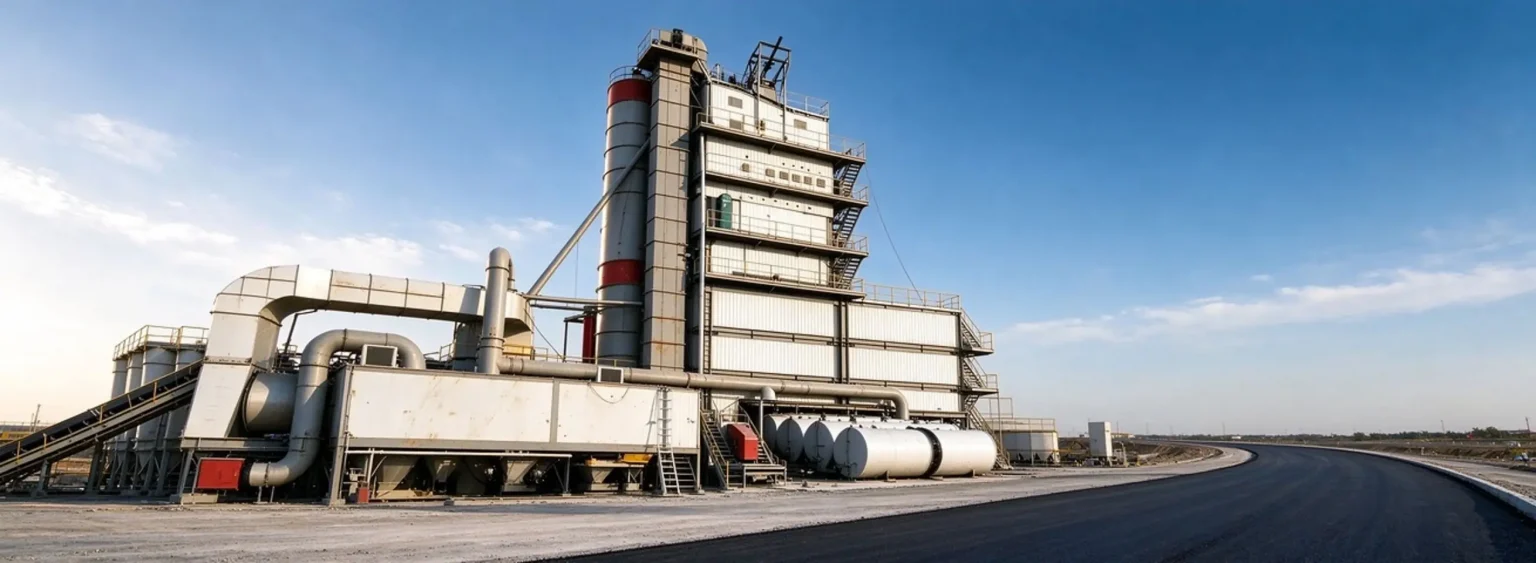
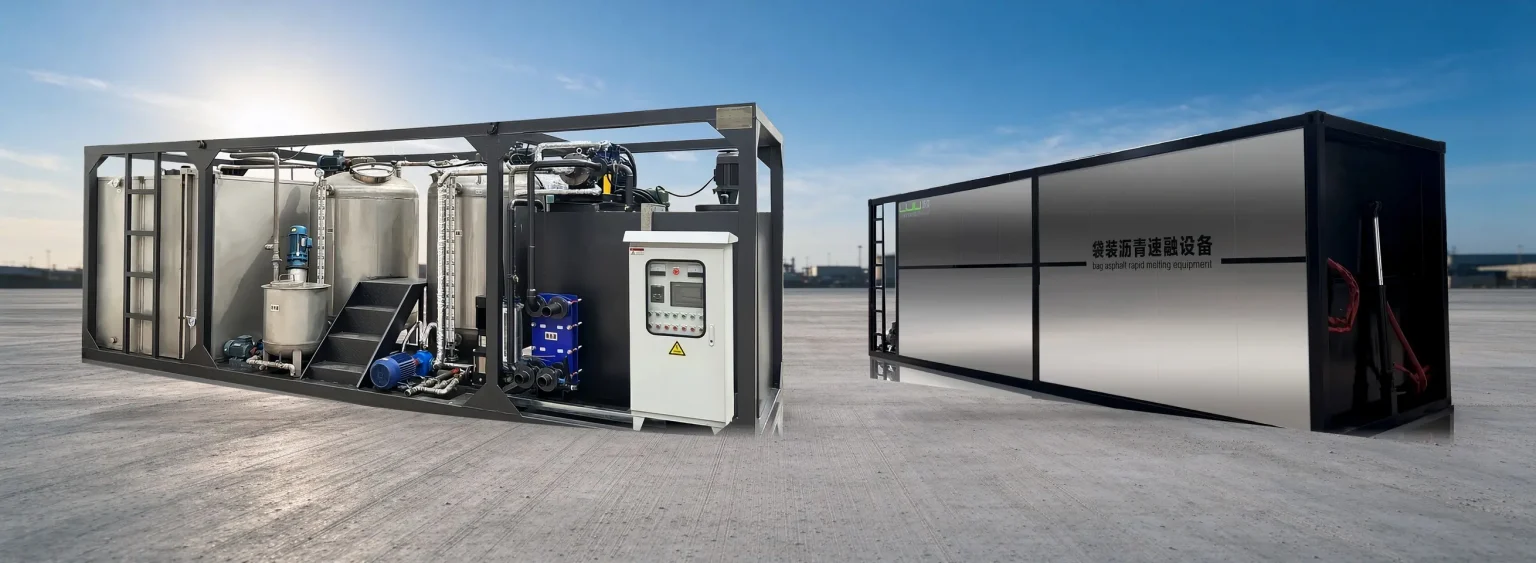

Asphalt Equipment
GLB30 Asphalt Mixing Plant (30t/h Mobile Modular Continuous Asphalt Plant)
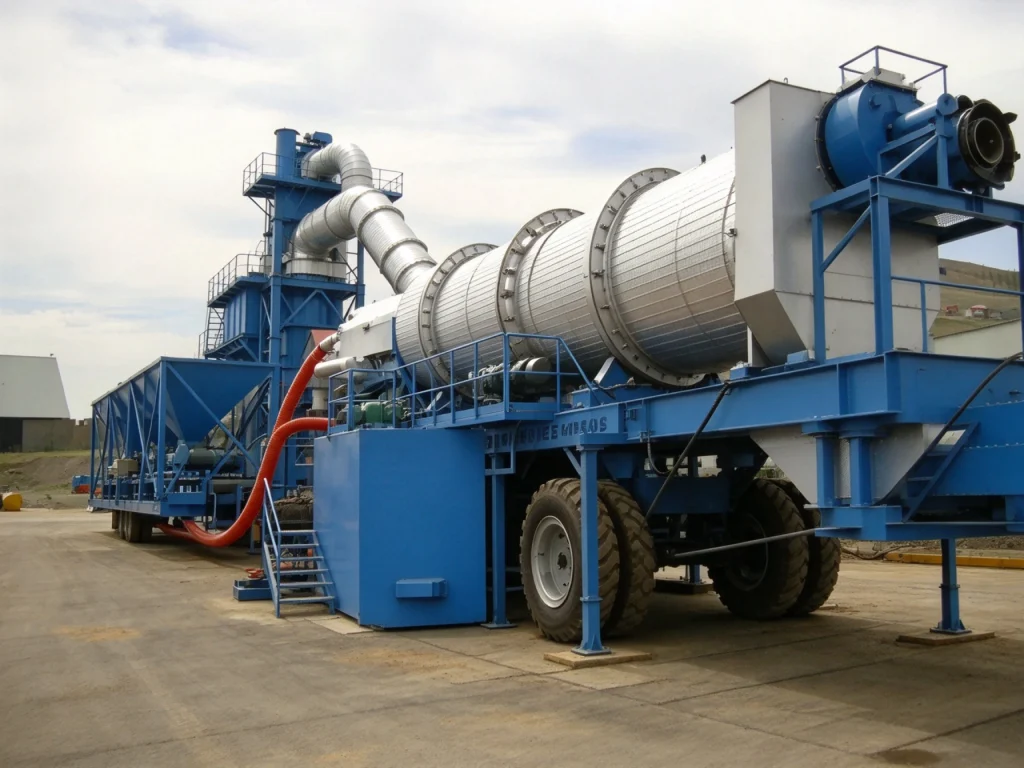
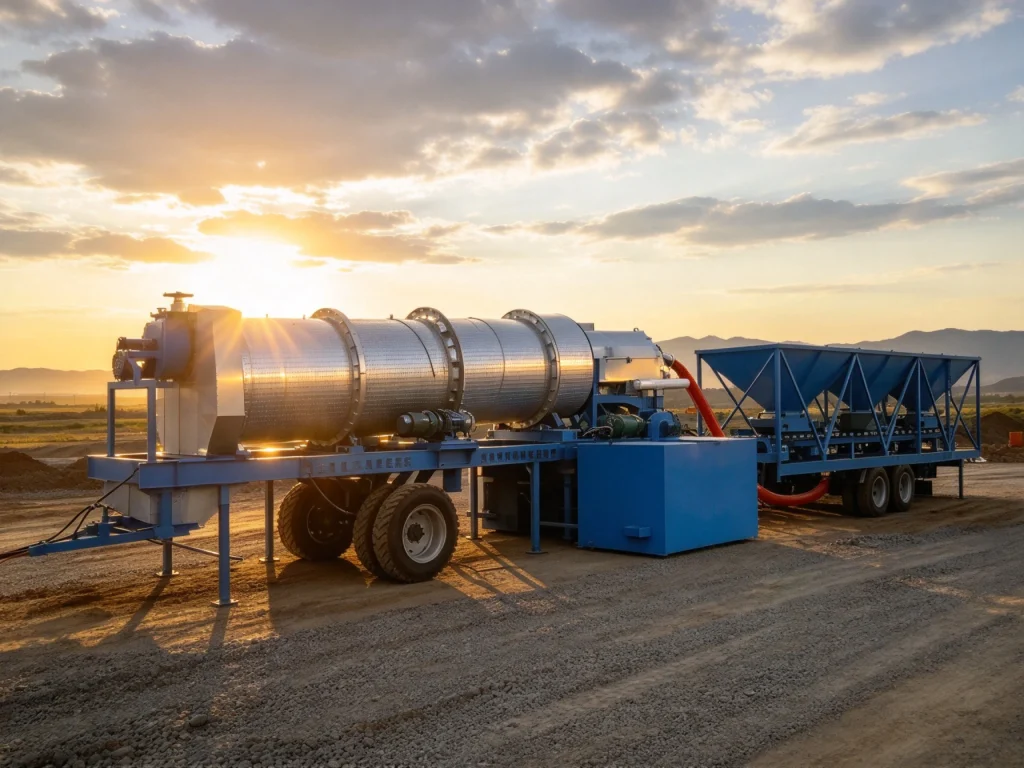
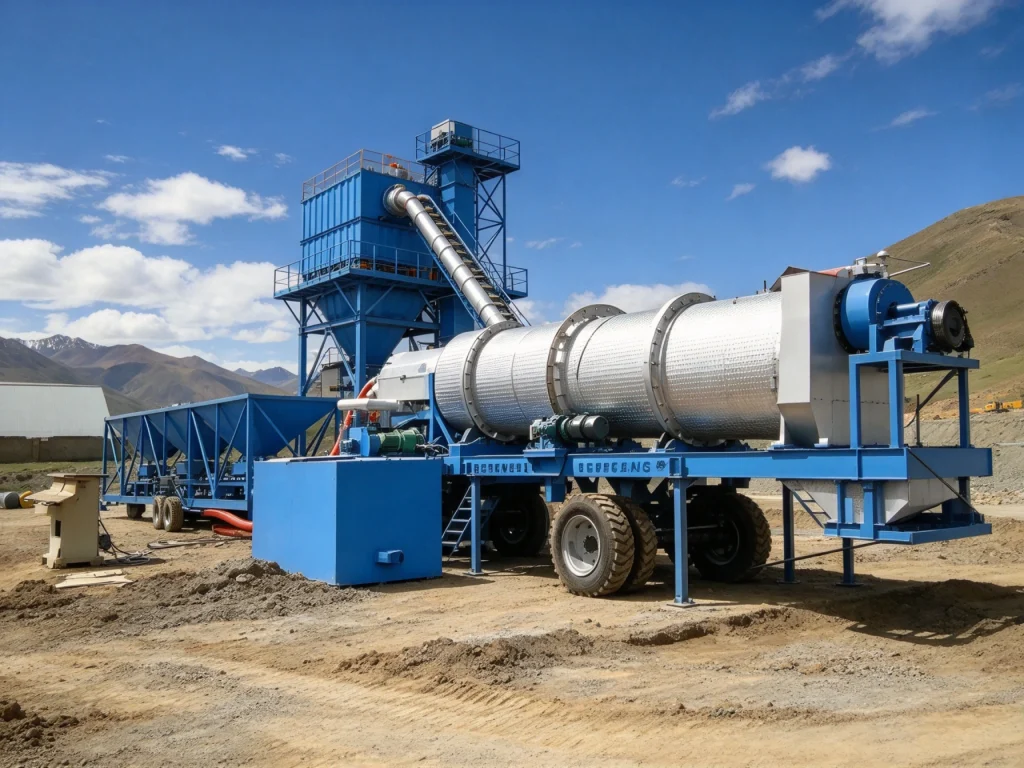
GLB30 continuous plant, 30 t/h, mobile modular layout for relocation. Low civil load. Specify fuel, voltage and port for an FOB window.
US$12,000 – US$22,000FOB Qingdao
LIJIU · Factory direct · Asphalt plant equipment
GLB Series Asphalt Mixing Plant- Model GLB30 asphalt mixing plant
- Equipment Type Modular, mobile, continuous mixing
- Rated Production Capacity 30 t/h (3% aggregate moisture, 150℃ discharge temperature)
- Total Installed Power 36 kW
- Quantity of Cold Hopper 3 pcs
- Cold Hopper Volume (flat-mounted) 4 m³
Factory desk: +86 136 3947 0101
GLB30 Asphalt Mixing Plant (30t/h Mobile Modular Continuous Asphalt Plant) — overview
Overview
Overview
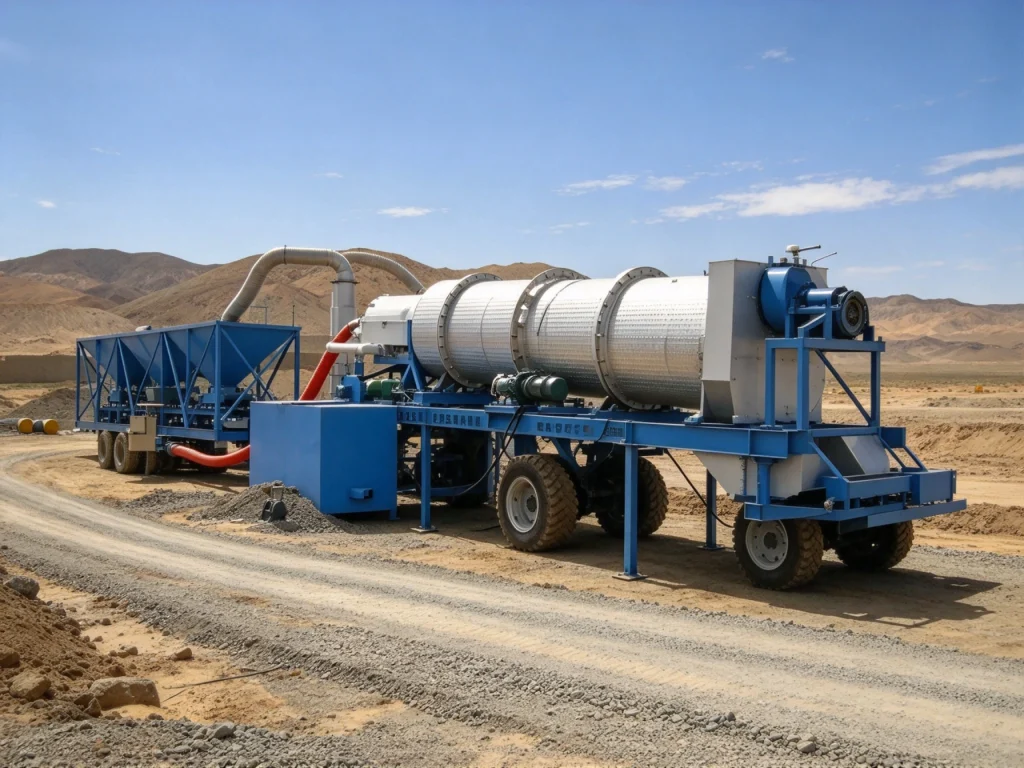
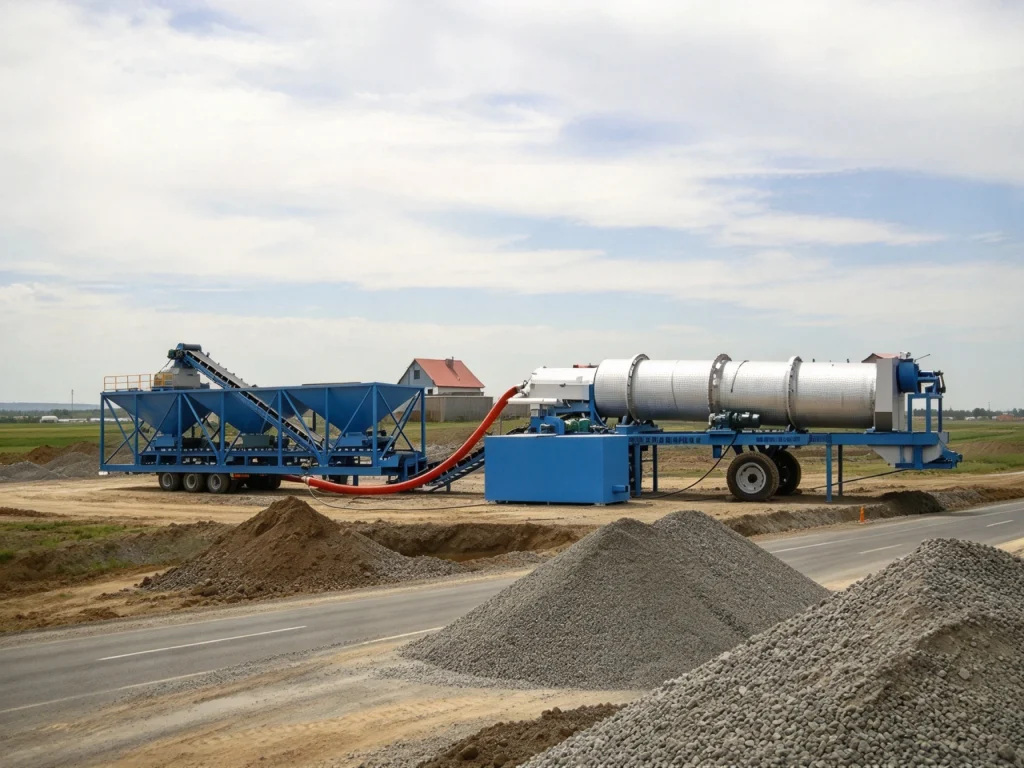
The GLB30 asphalt mixing plant is a compact, modular and continuous mobile mixing equipment for small-scale road construction. It features easy assembly and disassembly to adapt to frequent site transfers for temporary engineering projects.
This GLB30 maintains a stable production capacity of 30 tons per hour under standard working conditions with 3% aggregate water content and 150℃ discharging temperature. It focuses on low-power, space-saving and cost-effective asphalt production demands.
It is mainly tailored for township road paving, municipal road repair, rural road renovation and small industrial park pavement projects. It perfectly matches decentralized, short-cycle and low-volume road construction scenarios.
Working Principle
The GLB30 realizes continuous asphalt production through coordinated operation of feeding, drying, metering, mixing and intelligent control systems. For this unit, every subsystem operates synchronously for stable mixing quality.
On this plant, three standard cold hoppers store raw aggregates with electromagnetic speed regulation to control uniform feeding speed. Aggregate belts with 500mm width steadily convey materials into the drying drum for continuous feeding.
The countercurrent rotary drying drum of this unit heats wet aggregates to the standard 150℃ working temperature via the FD-150 oil burner. The supporting blower of this plant provides stable air supply to ensure even heating and moisture removal.
The asphalt pump on this unit delivers quantitative liquid bitumen for accurate proportioning. The induced draft device of this plant discharges flue gas and reduces dust pollution. The control cabinet of this unit unifies all parameters to guarantee continuous and standardized mixing.
Technical Specifications
The GLB30 asphalt mixing plant has a rated output of 30t/h, designed for conventional small road construction. The total installed power of this unit is only 36 kW, greatly reducing on-site power supply pressure and operation costs.
Equipped with an FD-150 oil burner, this plant mainly uses diesel fuel for efficient combustion. The drying drum adopts φ1200mm×4800mm specification with stable gear drive operation.
It adopts tail induced draft exhaust design to control on-site dust and meet basic environmental emission standards. The modular structure of this plant covers a small area without complex foundation construction.
All components are standardized for containerized packaging and transportation. The compact structure of this unit supports fast loading and unloading, suitable for cross-region project deployment and export shipping.
Full configuration list
| Serial No | System / Device | component | project | Specifications / Parameters |
|---|---|---|---|---|
| 1 | Main parameters | — | Model | GLB30 |
| 2 | Main parameters | — | Form | Modular, easy to assemble and dismantle, movable, continuous type |
| 3 | Main parameters | — | Output | 30 t/h |
| 4 | Main parameters | — | Power | 36 kW |
| 5 | Cold aggregate feeding equipment | Cold material bin (with isolation mesh at the bin opening) | A Warehouse Capacity | 4m³ (standard) |
| 6 | Cold aggregate feeding equipment | Cold material bin (with isolation mesh at the bin opening) | B Warehouse Capacity | 5.5m³ (stacking ) |
| 7 | Cold aggregate feeding equipment | Cold material bin (with isolation mesh at the bin opening) | C Warehouse Capacity | 3m³ |
| 8 | Cold aggregate feeding equipment | Cold material bin (with isolation mesh at the bin opening) | D speed-regulating motor | 1.5×3 kW (electromagnetic speed regulation) |
| 9 | Cold aggregate feeding equipment | Aggregate conveyor belt | A form | Three-point support trough frame |
| 10 | Cold aggregate feeding equipment | Aggregate conveyor belt | B Conveying Capacity | 60t/h |
| 11 | Cold aggregate feeding equipment | Aggregate conveyor belt | C Bandwidth | 500mm |
| 12 | Cold aggregate feeding equipment | Aggregate conveyor belt | D gear motor | BWD13-17-1.5KW |
| 13 | Cold aggregate feeding equipment | feeding conveyor belt | Form A | Three-point support slotted frame |
| 14 | Cold aggregate feeding equipment | feeding conveyor belt | B Conveying Capacity | 60t/h |
| 15 | Cold aggregate feeding equipment | feeding conveyor belt | C belt width | 500mm |
| 16 | Drying drum | drying drum | Form A | Inclined Rotating Counter-flow Type |
| 17 | Drying drum | drying drum | B capacity | At moisture content of 3% and discharge temperature of 150℃: 30t/h |
| 18 | Drying drum | drying drum | C Drum Specifications | φ1200mm×4800×12mm |
| 19 | Drying drum | drying drum | D Gear Motor | BWY27-29-7.5KW |
| 20 | Drying drum | drying drum | E Transmission Mode | gear drive |
| 21 | Drying drum | oil burner | Model A | FD-150 |
| 22 | Drying drum | oil burner | B Power | 1.1KW |
| 23 | Drying drum | blower | Model A | Y4-72-5A |
| 24 | Drying drum | blower | B Power | 7.5KW-2P |
| 25 | Asphalt Supply System | asphalt pump | — | 50 pump, 4KW |
| 26 | air inducing device | Tail induced draft | Form A | Tail induced draft |
| 27 | air inducing device | Tail induced draft | B Power | 4KW |
| 28 | Finished Goods Warehouse | — | Capacity | 1 cubic meter |
| 29 | control cabinet | — | — | — |
Key advantages
First, the GLB30 asphalt mixing plant features ultra-low power consumption with total 36 kW installed power. It adapts to weak on-site power conditions and saves long-term electricity costs for users.
Second, it has flexible mobile modular design. The integrated structure supports quick assembly and disassembly, shortening site setup time by over 40% compared with traditional fixed mixing equipment.
Third, it comes with 3 sets of standard cold hoppers with 4m³ single-bin capacity, achieving uniform raw material proportioning and improving finished asphalt mixing uniformity.
Fourth, simple structure and standard accessories lower maintenance difficulty. Common wearing parts are easy to replace, reducing later operation and maintenance investment effectively.
Applications and Cases
This plant is widely applied in small and medium-sized pavement engineering projects. It is the preferred equipment for rural and township new road construction and old road renovation.
It fits municipal road daily repair, pavement patching and community road upgrading projects perfectly. The small output and flexible movement of this plant adapt to scattered urban construction points.
This GLB30 also serves temporary pavement works for industrial parks, scenic spots and mountain roads. It works stably in narrow sites and insufficient power supply scenarios.
Many domestic rural road upgrading projects and overseas small infrastructure projects adopt this equipment for its high cost performance and flexible construction advantages.
Installation, Training & Spare Parts
This plant has low site requirements. It only needs flat and compacted ground without professional reinforced concrete foundation, saving foundation construction time and cost.
The factory provides professional on-site commissioning and installation guidance. Technical staff debug each system to ensure the whole plant reaches standard production status quickly.
Free operation training covers equipment start-stop, parameter adjustment, temperature control and daily inspection. Operators can master skilled operation in a short time.
We supply complete spare parts including conveyor belts, burner accessories and pump parts. Long-term online after-sales support solves equipment operation faults remotely.
What Continuous Mixing Means for This GLB30 asphalt mixing plant
A continuous plant does not weigh a batch, mix it and discharge it before starting the next one. Instead, aggregate flows from the cold hoppers through the dryer and into the mixer at a controlled rate, and bitumen is added continuously to match. For the GLB30 that flow is set to deliver 30 t/h under standard conditions of 3% aggregate moisture and a 150 °C discharge temperature.
The practical benefit is simplicity and low power. The complete unit draws 36 kW in total, with the largest single consumers being the 7.5 kW drying-drum drive, the 7.5 kW blower and the 4 kW asphalt pump. That figure is low enough that many sites can run the plant from an existing supply without a dedicated transformer, which is often the difference between a project being viable and not.
Site Preparation and Relocation
The GLB30 asphalt mixing plant is a modular, mobile, continuous unit, which changes what site preparation involves. It needs flat, compacted ground rather than a reinforced concrete foundation, so a temporary site can be prepared quickly. The three cold hoppers hold 4 m³ each in the flat-mounted arrangement or 5.5 m³ when stacked, and the aggregate and feeding conveyors are 500 mm wide with a capacity of 60 t/h, giving comfortable margin above the plant’s rated output.
Relocation is straightforward because the modules are designed to be moved rather than rebuilt. Plan the move around the largest section and confirm the access road width and the lifting equipment at both ends. Because the plant is intended for short and medium projects — township roads, rural renovation, municipal repair, small industrial park roads, mountain temporary routes and scenic area works — the ability to recover the plant at the end of one job and re-commission it at the next is a real part of its value.
Capacity Planning for a 30 t/h Plant
Thirty tonnes per hour is a genuine output, but it is not a constant. Rated capacity of this plant assumes the standard moisture condition, and wetter aggregate reduces throughput because more of the burner’s energy goes into evaporating water. In practice a GLB30 used with well-drained stockpiles will hold close to its rating, while one fed from open, rain-exposed piles will not. Covering the aggregate stockpile is the simplest way to protect the output you paid for.
Match the paving or loading rate to this unit rather than the other way round. At 30 t/h, a modest truck programme keeps the finished material bin cycling, and the 1 m³ finished bin is sized for that pattern. If your projects regularly need more than about 200 tonnes in a single shift, the next model in the range will be the more economical choice.
Commissioning and Daily Operation
Commissioning this plant is mostly a matter of calibration and confirming that the interlocks work of calibration and confirming that the interlocks work. Check the burner and its flame-failure protection, confirm the asphalt pump delivers the set rate, and verify the aggregate feed rate against the drum capacity. The control cabinet is an independent unit, and the plant supports both automatic and manual control modes, so operators can switch to manual if a sensor needs attention without stopping the whole production sequence.
Daily operation of the GLB30 asphalt mixing plant should include a walk-around of the conveyor belts for alignment and tracking, a check of the burner filter and fuel supply, and confirmation that the dust-collection path is clear. Keep the lubrication points on the drum drive, conveyor geared motors and the blower on the manufacturer’s schedule, and record the fuel consumption per tonne of mix. A gradual rise in fuel consumption at a stable production rate is the earliest indication that the burner needs cleaning or that aggregate moisture has increased.
Fuel, Voltage and Ordering Information
On this plant, the standard burner is the FD-150 oil burner, which runs on diesel oil, and the plant is quoted FOB Qingdao from the Dezhou works. Before ordering, confirm the fuel type available at the destination site and the local supply voltage and frequency, since both are set when the plant is built. Supplying those two details with the enquiry is what allows the factory to quote a firm specification rather than a nominal one.
Product images
References
Independent background on the practices described on this page is available from the Federal Highway Administration asphalt pavement recycling programme and from the Asphalt Institute. Both are non-commercial industry references and neither is affiliated with LIJIU.
Related equipment and guides
Standards and references
Specifications on this page follow European Asphalt Pavement Association — Industry standards. Ask us for the full test report when you request a quote.
Applications
Applications
New asphalt mixing plants, plant upgrades, bagged-bitumen melting on remote sites, emulsion or PMB terminals, and foam retrofit on existing batch plants.
Township asphalt road construction
Rural road renovation projects
Municipal pavement repair works
Small industrial park road paving
Mountain temporary road projects
Scenic area road construction
Small highway maintenance jobs
Community pavement upgrading
Why contractors specify this line
Advantages
Mobile wheeled design for easy relocation
Low total installed power of only 36 kW
Compact layout saves construction site space
Modular structure for fast assembly
Simple operation and low maintenance cost
Stable continuous mixing performance
Adaptable for small road projects
Specifications
Specifications
Values below come from the product record. Freeze them on the approval drawing before you put them in a bid.
| Item | Value |
|---|---|
| Model | GLB30 asphalt mixing plant |
| Equipment Type | Modular, mobile, continuous mixing |
| Rated Production Capacity | 30 t/h (3% aggregate moisture, 150℃ discharge temperature) |
| Total Installed Power | 36 kW |
| Quantity of Cold Hopper | 3 pcs |
| Cold Hopper Volume (flat-mounted) | 4 m³ |
| Cold Hopper Volume (stacked) | 5.5 m³ |
| Cold Hopper Motor | 1.5×3 kW, electromagnetic speed regulation |
| Aggregate Conveyor Belt Capacity | 60 t/h |
| Aggregate Conveyor Belt Width | 500 mm |
| Aggregate Conveyor Geared Motor | BWD13-17-1.5 kW |
| Feeding Conveyor Belt Capacity | 60 t/h |
| Feeding Conveyor Belt Width | 500 mm |
| Drying Drum Type | Tilting rotary counter-current type |
| Drying Drum Dimension | φ1200 mm × 4800 mm ×12 mm |
| Drying Drum Geared Motor | BWY27-29-7.5 kW |
| Drying Drum Drive Mode | Gear drive |
| Oil Burner Model | FD-150 |
| Oil Burner Power | 1.1 kW |
| Blower Model | Y4-72-5A |
| Blower Power | 7.5 kW-2P |
| Asphalt Pump Power | 4 kW |
| Induced-draft Device Type | Tail induced draft |
| Induced-draft Device Power | 4 kW |
| Finished Material Bin Volume | 1 m³ |
| Control System | Independent control cabinet |
Installation and commissioning
Process
-
01
Interface check
Foundations, power, fuel, existing tower piping and target tph.
-
02
Set-down
Unpack, align, pipe, cable, insulate and check safety valves.
-
03
Cold and hot commissioning
Interlocks, temperature curves, foam or mill stability, weigh accuracy.
-
04
Handover
Trial-production log, operator training, maintenance interval and wear-parts list.
GLB30 Asphalt Mixing Plant (30t/h Mobile Modular Continuous Asphalt Plant) FAQ
What is the rated capacity of GLB30 asphalt mixing plant?
Rated output is 30 t/h under standard working conditions.
What fuel does the burner support?
The standard FD-150 burner uses diesel oil.
Do I need a concrete foundation for installation?
No, only flat compacted ground is required.
How many cold aggregate bins are included?
It comes with 3 cold hoppers as standard.
What is the total installed power?
Total installed power of the whole plant is 36 kW.
Can this plant be moved to another job site quickly?
Yes, wheeled modular design supports fast relocation.
What is the volume of finished material bin?
The finished material bin capacity is 1 m³.
Does it support manual operation mode?
Yes, both automatic and manual control modes are available.
Need an FOB configuration for this model?
Send tph or tonnage, RAP ratio, voltage, fuel and destination port. LIJIU replies within 24 hours with scope, lead time and a spare-parts list. Desk: +86 136 3947 0101
Related models
Related
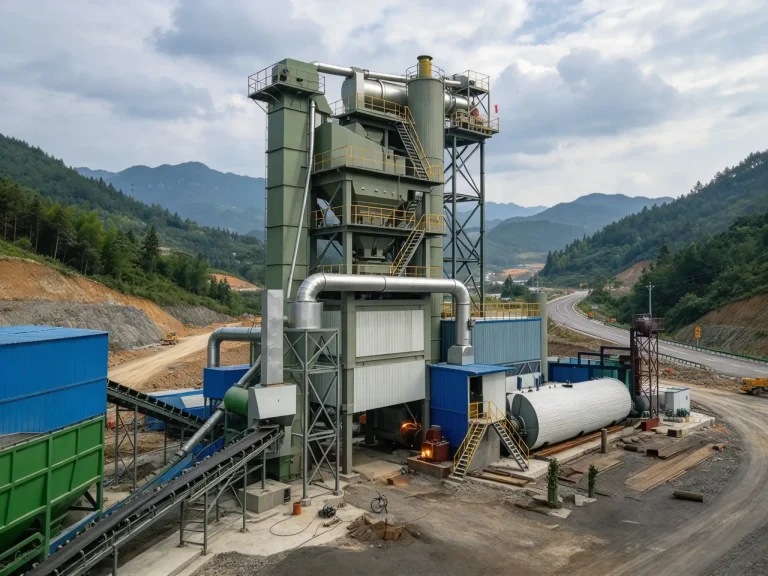
RLB1000 Asphalt Hot Recycling Plant (80t/h Drum Type Asphalt RAP Mixing Equipment)
View specs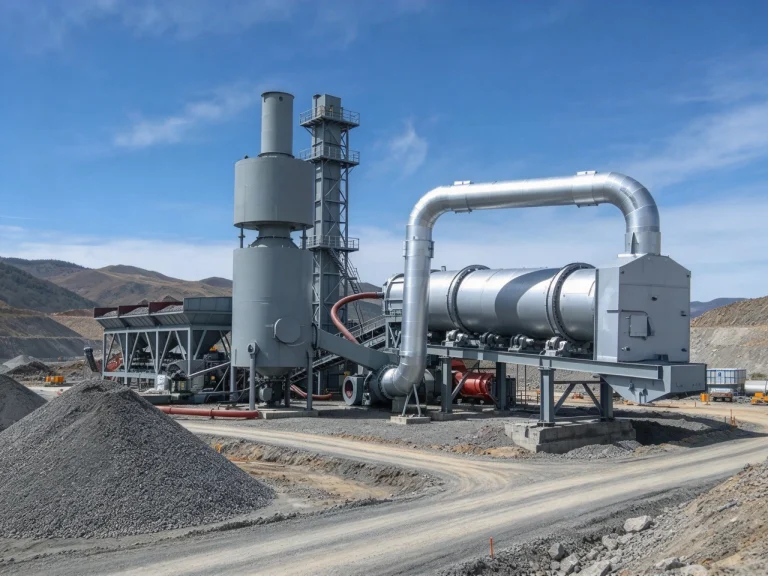
GLB60 Asphalt Mixing Plant (50-80t/h Modular Continuous Asphalt Mixing Plant)
View specs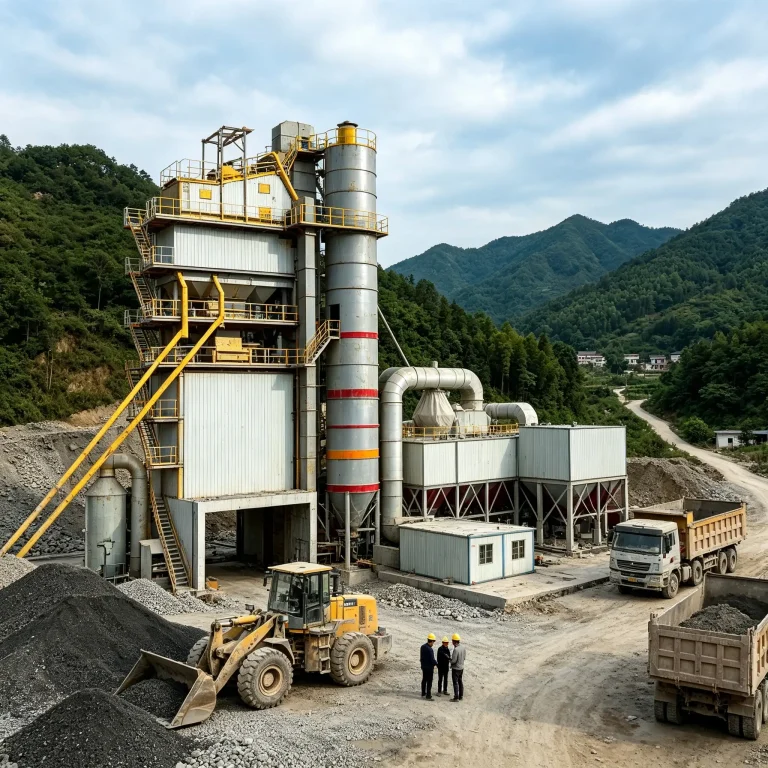
LB4000 Asphalt Mixing Plant (280-340t/h Energy-Saving Modular Asphalt Batching Plant)
View specsRelated guides
Guides