
Pavement Materials
Water-Based Colored Thin Pavement System COLORFULWAY (1-mm Eco-Friendly Slow-Travel Overlay)
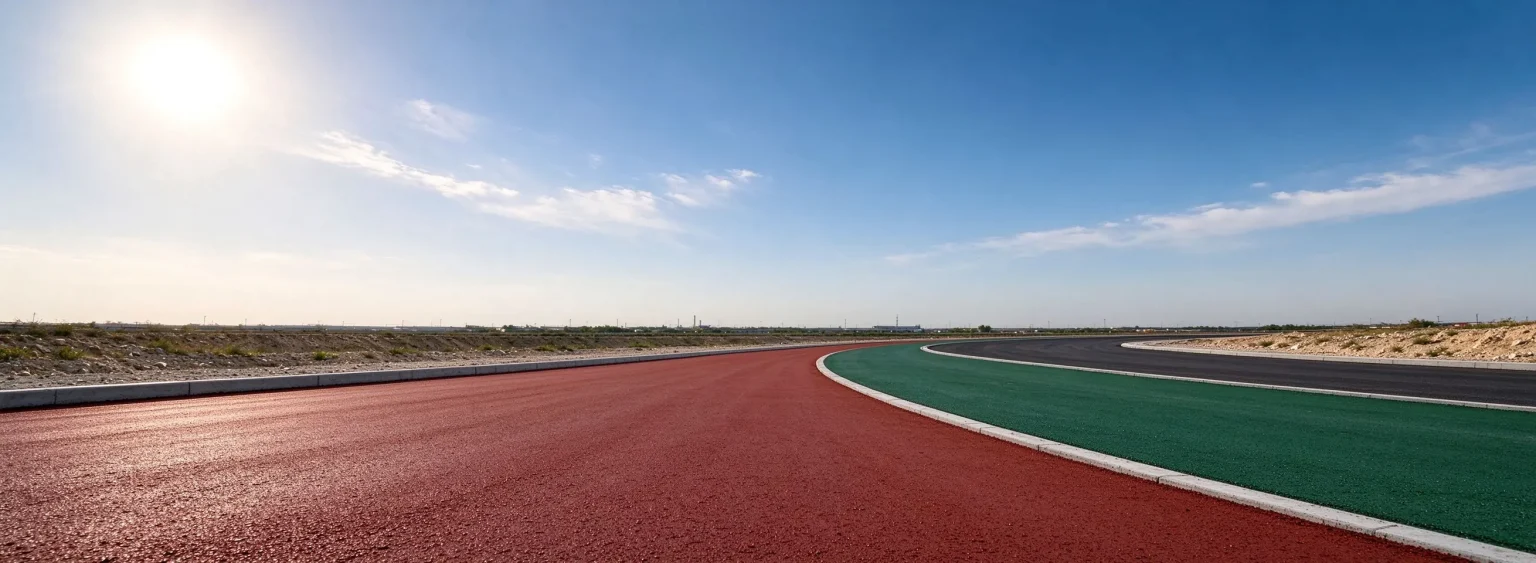
Water-based colored thin pavement system COLORFULWAY is an eco-friendly modified polymer paving solution for tourist highway greenway slow-travel projects. Total thickness only 1 mm, ambient-temperature application without raising original pavement elevation. Delivers anti-UV, crack-resistant, low-VOC performance with customizable rich colors, factory-tested in Dezhou, FOB Qingdao.
US$4,500 – US$5,000FOB Qingdao
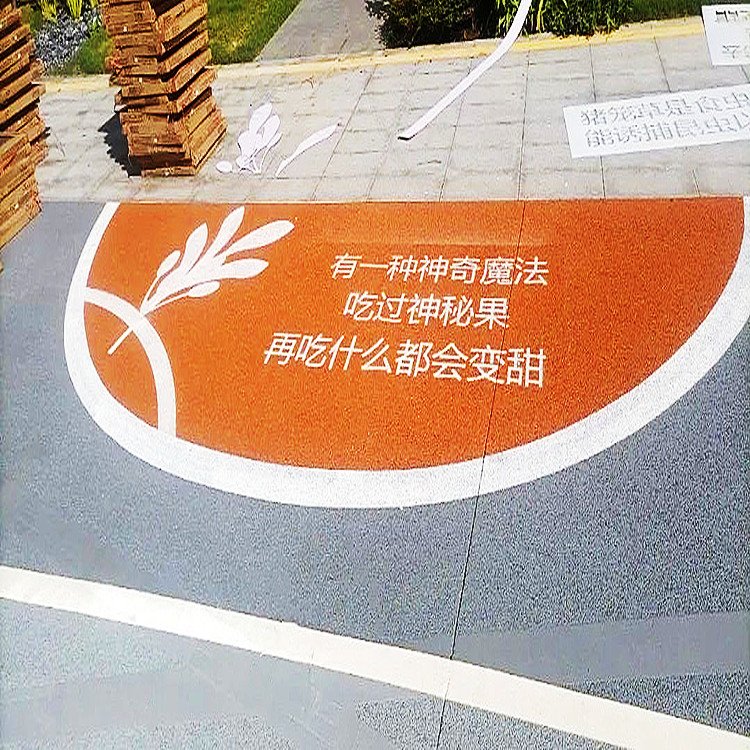
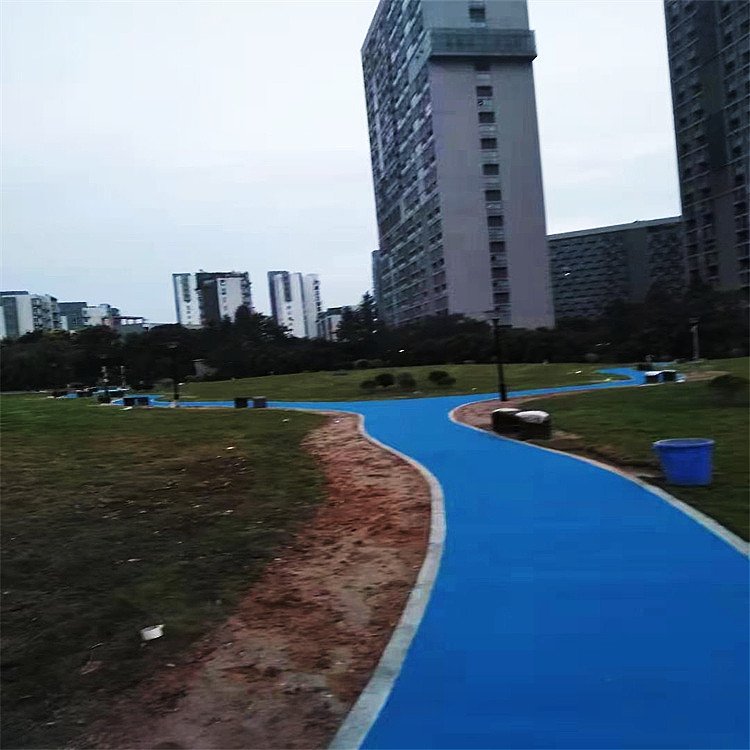
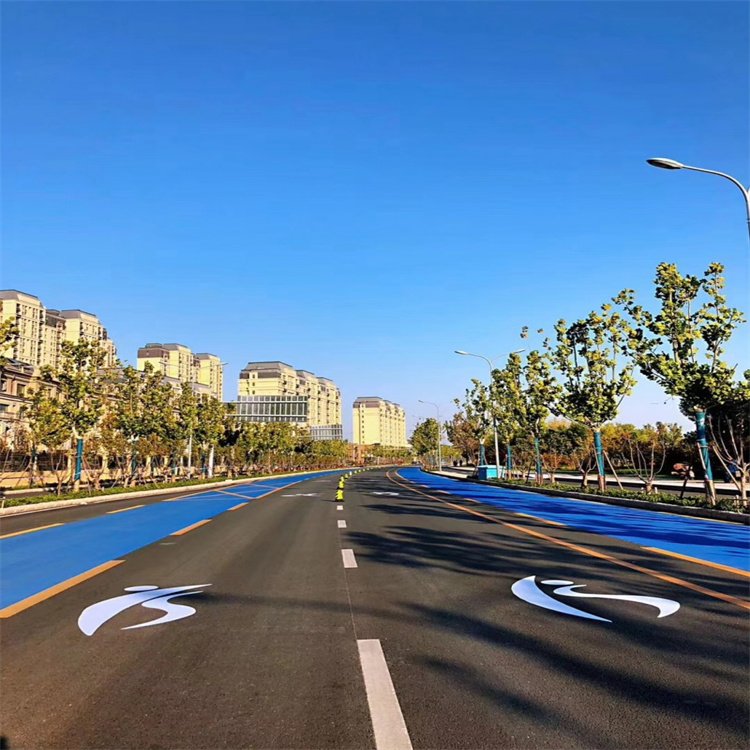
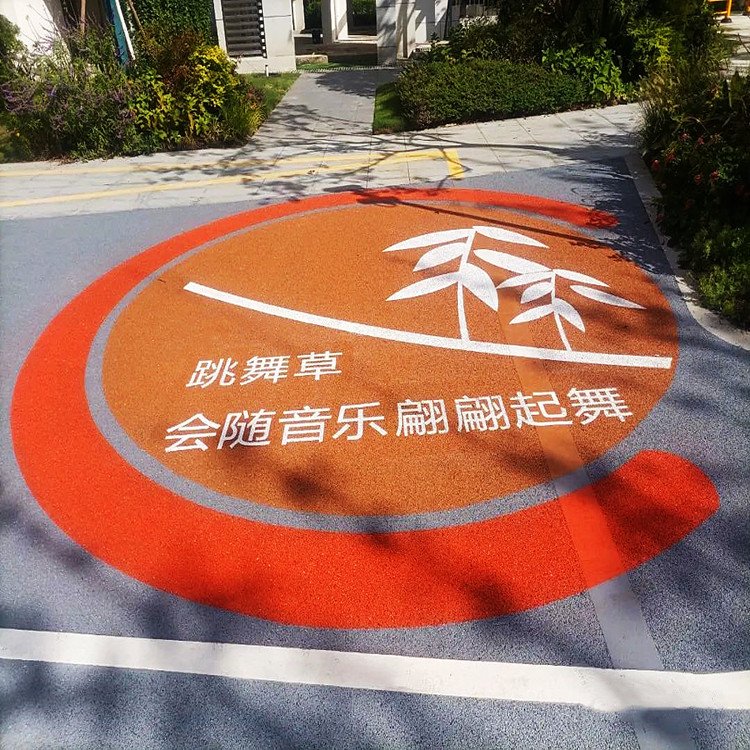
LIJIU · Factory direct · Pavement materials
Colored Pavement Series- Product Name COLORFULWAY Colored Ultra-Thin Overlay
- Total Paving Thickness Approx.1 mm
- Construction Condition Ambient-temperature application
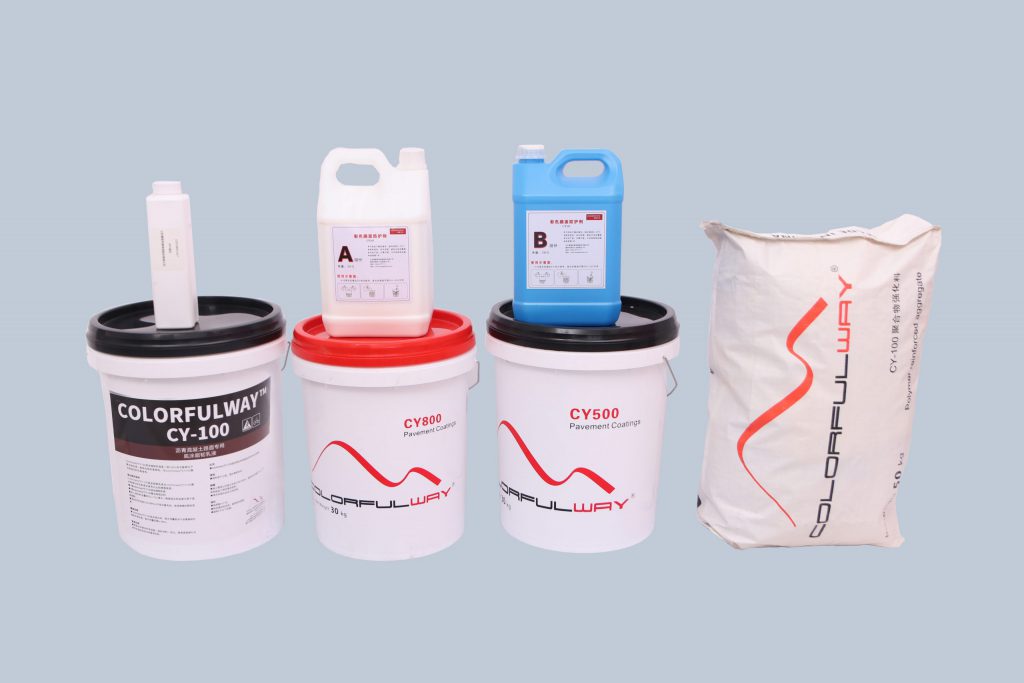
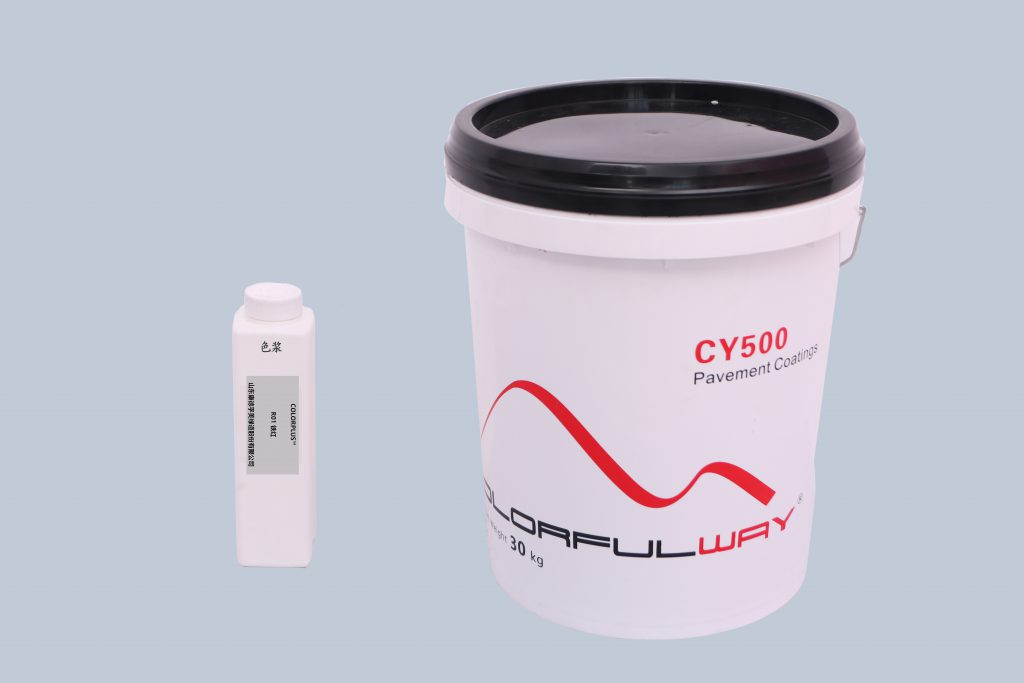
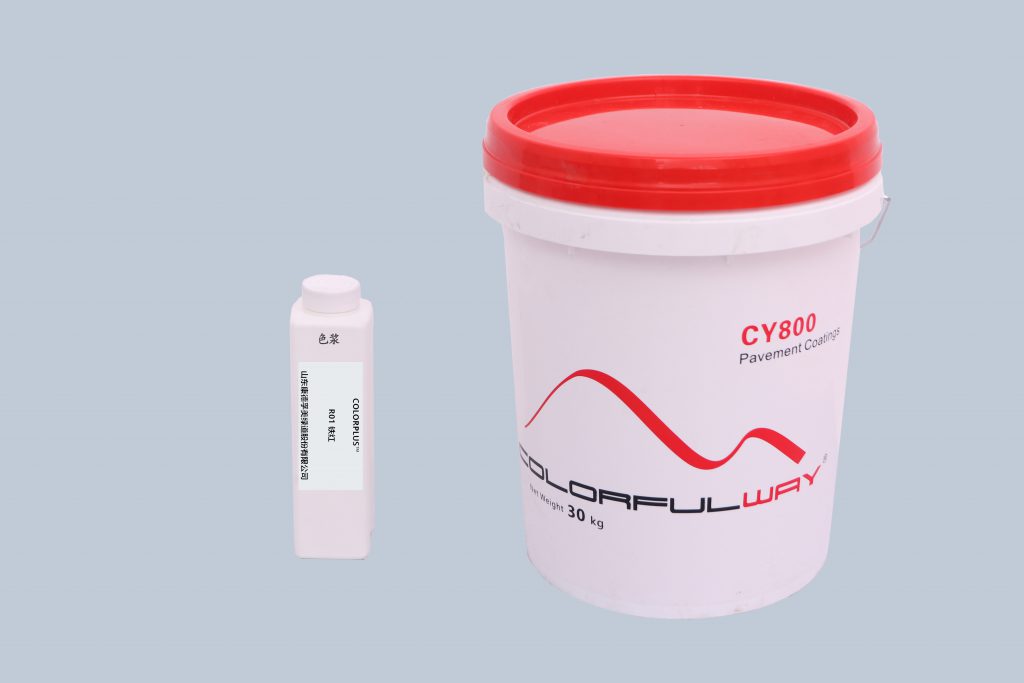
- System Structure Primer CY800 / Intermediate CY800 / Surface CY1000
- Primer Application Rate 0.7-1.2 kg/m²
- Intermediate Coating Application Rate 0.5-0.9 kg/m²
Factory desk: +86 136 3947 0101
Water-Based Colored Thin Pavement System COLORFULWAY (1-mm Eco-Friendly Slow-Travel Overlay) — overview
Overview
The water-based colored thin pavement system COLORFULWAY is an innovative eco-friendly modified polymer paving solution for slow-traffic greenway construction. This system solves common drawbacks of traditional colored pavement such as thick overlay, hot-construction requirement and fast color fading.
Core Structure & Working Principle of the water-based colored thin pavement system
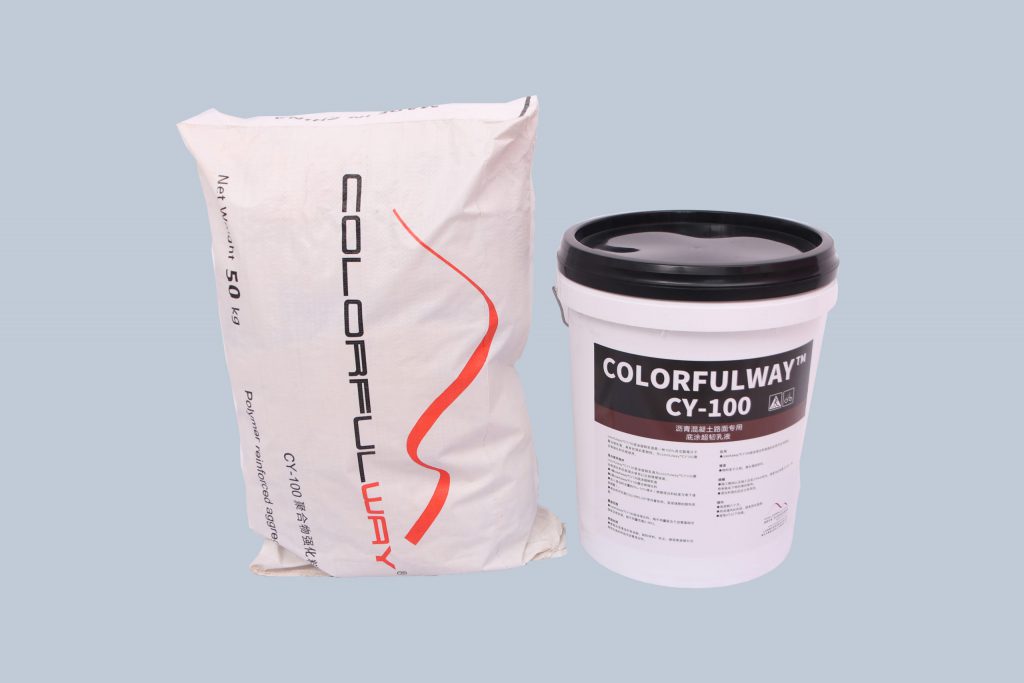
It adopts a three-layer composite structure: primer, intermediate coating and top surface coating. The overall finished thickness is merely 1 mm. It will not add extra elevation or structural load onto the existing asphalt base, which is why the water-based colored thin pavement system suits overlay projects.In this system, a water-based self-crosslinking polymer mixes with high-strength wear-resistant silica aggregates. After matched COLORPLUS pigment blending, it forms dense, flexible colored surface. Strong adhesive force locks onto original substrate; flexible formula adapts minor base deformation to prevent cracking. Anti-UV components effectively slow down color fading under outdoor sunlight exposure.
Main Technical Performance
All performance indexes of this system comply with Chinese national road-coating standards. Skid-resistance BPN keeps ≥45 to secure safety for cyclists and pedestrians. Tensile bonding strength reaches ≥2.0 MPa for stable adhesion on asphalt concrete.
It passes 800-hour artificial accelerated aging test and three-cycle low-temperature cracking test. Wear loss stays ≤50 mg under standard abrasion test. The water-based formula controls VOC within ≤150 g/L for environmental-friendly public-area application.
On-Site Construction Guidance
The whole system is an ambient-temperature cold-construction system without heating equipment. Before coating with this system, the asphalt base surface must be fully cleaned. For this system, construct in sequence: primer CY800, intermediate CY800 and top coating CY1000. Each layer follows specified application rate.
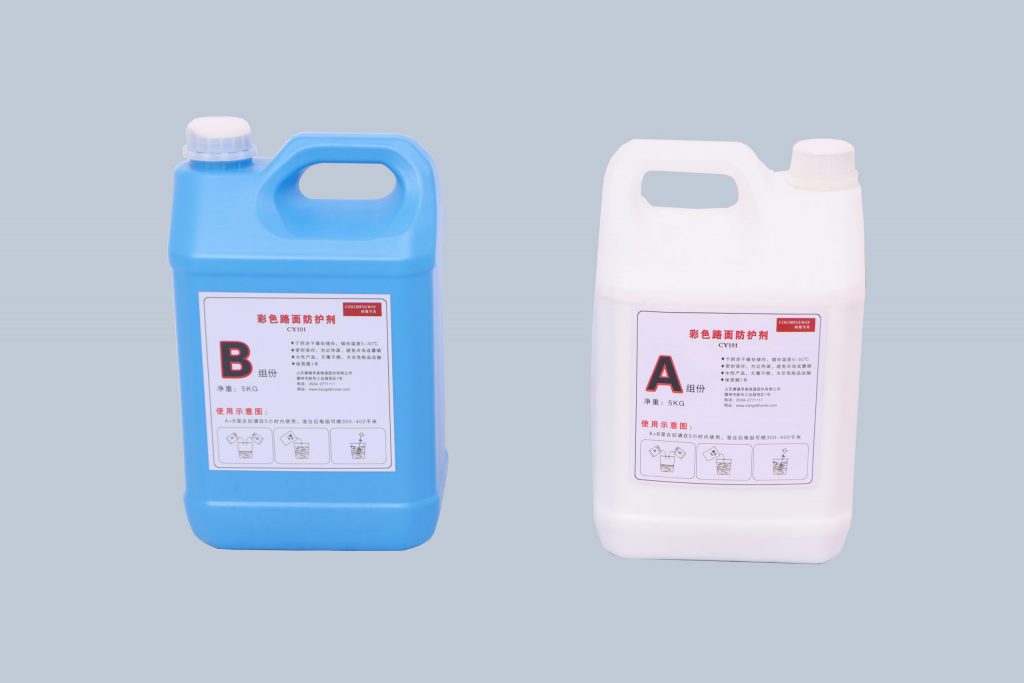
Allow each coat to reach the recoat condition specified in the current application sheet before applying the next layer. Apply the specified protective treatment after the surface coat. Protect the coating while it cures, and reopen the surface only after the supplier’s curing and site acceptance requirements for the intended traffic have been met.
Color Customization & Application Scope
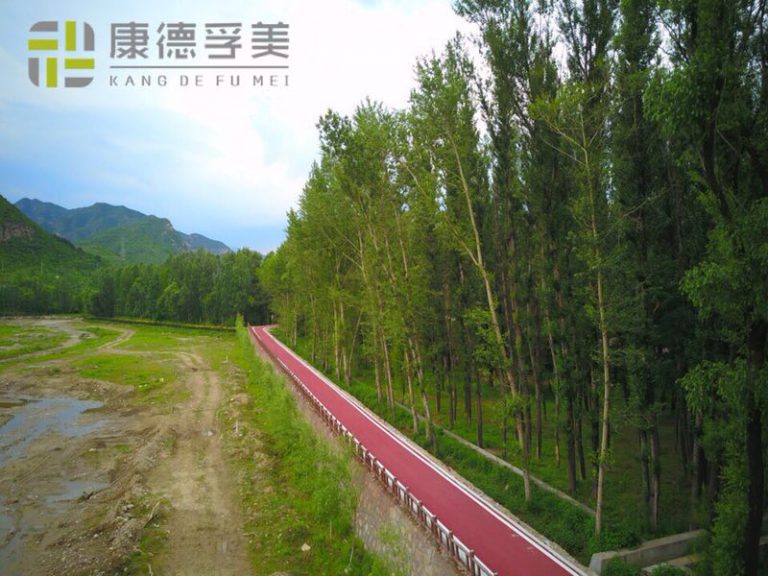
Cooperated with COLORPLUS pigment series, this system supports abundant custom color schemes. It is widely adopted for tourist highway greenways, urban bike-lanes, park walkways and scenic-spot recreational pavement. Low-maintenance property reduces later-stage project operating costs.
Base Coating Main Agent Technical Specifications
| Project | Qualification | Experimental method |
|---|---|---|
| Viscosity at 25 °C: Pa·s | ≤ 50 | GB/T2794-2013 |
| Specific gravity (25 °C), g/cm³ | 1.45 ~ 1.6 | ASTM.D1475 |
| Surface | Multicolour | Visual |
| CY Fine Sand Specification | 80 – 120 mesh | Visualization |
Surface Coating Performance Parameters
| Project | Qualification | Experimental method |
|---|---|---|
| The state of the base material in the container | No lumps or skinning; easy to mix evenly. | GB/T3186-2006 |
| Hydrolytic resistance | After soaking in water for 24 hours, no abnormal phenomena should be observed. | JTT712-2008 |
| Resistance to alkali | Soaking in a calcium hydroxide protective solution for 24 hours showed no abnormal phenomena. | JTT712-2008 |
| Bonding strength to cement concrete, MPa | ≥ 2 | Tension test |
| Adhesive strength, KN/m | ≥ 2.0 | GB/T7122-1996 |
| Non-stick drying time (base, intermediate and surface coats), min | ≤60 (test requirement; not traffic reopening time) | COLORFULWAY technical brochure, p. 9 |
Colorant (Slurry) Performance Parameters
| Project | Qualification | Experimental method |
|---|---|---|
| Tinctorial strength | Low dosage, strong color intensity | GB/T 21473-2008 |
| Light permanency | ≥ 5 | GB/T 21473-2008 |
| Weather fastness | ≥ 3 | GB/T 21473-2008 |
CY Color Super Surface Technology Specifications
| Test item | Requirement | Experimental method |
|---|---|---|
| Gel time, min | ≥ 10 | JTT 712-2008 |
| Base Material Adhesion (Circle Method) | ≤ Level 4 | JTT 712-2008 |
| Skid resistance | BPN ≥ 45 | JTT 231-2004 |
| Non-stick drying time (base, intermediate and surface coats), min | ≤60 (test requirement; not traffic reopening time) | COLORFULWAY technical brochure, p. 9 |
| The state of the base material in the container | No lumps or skinning; easy to mix evenly. | GB/T3186-2006, JTT712-2008 |
| Formed appearance | color and aggregate particle distribution shall be uniform, with no cracks or detachment of aggregate particles after drying and molding | Visual inspection |
| Hydrolytic resistance | After soaking in water for 24 hours, no abnormal phenomena should be observed. | JTT 712-2008 |
| Resistance to alkali | Soaking in a calcium hydroxide protective solution for 24 hours showed no abnormal phenomena. | JTT 712-2008 |
| Abrasion performance | ≤ 30 mg/1000 rpm | GB/T 22374-2008 |
Table-10-1 CY Color Super Surface Quality Acceptance Requirements
| Engineering Sub-item | Testing Parameters | Requirement | Conformity Assessment | Testing frequency |
|---|---|---|---|---|
| CY paint-coat | Hydrolytic resistance | After soaking in water for 24 hours, no abnormal phenomena should be observed. | After soaking in water for 24 hours, no abnormal phenomena should be observed. | 3 Point/200 m² |
| Cohesional strength | ≥2.0 MPa | ≥ 2.0MPa | 3 Point/200 m² | |
| Surface layer-Bottom layer | Coating weight | 0.7 ~ 1.2kg/ m² | 0.7 ~ 1.2kg/ m² | 3 Point/200 m² |
| Surface layer | Coating weight | 0.5 ~ 0.9kg/ m² | 0.5 ~ 0.9kg/ m² | 3 Point/200 m² |
| Skin coat | Hydrolytic resistance | After soaking in water for 24 hours, no abnormal phenomena should be observed. | After soaking in water for 24 hours, no abnormal phenomena should be observed. | 3 Point/200 m² |
| Coating weight | 0.1 ~ 0.3kg/ m² | 0.1 ~ 0.3kg/ m² | 3 Point/200 m² |
Product images
Why a 1-mm Coating Is Different from Thin Hot Overlays
Most coloured pavement solutions add thickness. A thin hot overlay, a slurry seal or a coloured micro-surfacing layer each raise the finished surface by several millimetres to several centimetres, which changes kerb heights, drainage falls and the transition at every access point. The COLORFULWAY system adds approximately 1 mm in total, applied at ambient temperature, so the original pavement elevation is effectively unchanged.
That matters on a greenway or cycle path where the surface has been built to a designed level and where the edges meet kerbs, planting strips and structures. It also matters for load: a 1 mm system adds almost nothing to the structure, so it can be applied to an existing sound substrate without recalculating the pavement design. The trade-off is that the substrate must be sound in the first place, because a thin system follows the profile beneath it rather than correcting it.
Water-Based Colored Thin Pavement System: Layer by Layer
The system is built as a sequence of coats rather than a single product, and each coat has a defined application rate.
- Primer, CY800 — applied at 0.7–1.2 kg/m². This coat bonds to the substrate and seals the surface so the subsequent layers adhere evenly.
- Intermediate, CY800 — applied at 0.5–0.9 kg/m². This coat builds the body of the system and carries the wear-resistant silica aggregate that provides skid resistance.
- Top surface, CY1000 — applied at 0.1–0.3 kg/m². This coat delivers the finished colour and the final protective surface.
Colour comes from the COLORPLUS pigment series, which allows custom multi-colour schemes rather than a fixed palette. Because the colour sits in the coating system rather than in a surface dressing, an individual panel can be recoated later without disturbing the surrounding surface — a point that matters on projects where appearance is maintained over years rather than only at handover.
Safety and Durability Figures Explained
The published performance figures describe what the system is intended to deliver in service. Skid resistance reaches BPN ≥ 45, which is the property that matters most for a cycle path in wet weather. Tensile bonding strength is ≥ 2.0 MPa, which governs whether the coating stays in place under braking and turning forces. Wear resistance is measured at ≤ 50 mg under a 500 rpm, 750 g load with a CS-17 wheel, and low-temperature crack resistance is demonstrated by three cycles at −10 °C without cracking. Artificial ageing resistance reaches a comprehensive grade of ≤ Level 1 after 800 hours.
The published VOC limit is ≤150 g/L. The technical brochure lists a non-stick drying requirement of ≤60 minutes for the base, intermediate and surface coats under the referenced test procedure. This is a coating test result, not a full-cure time or permission to reopen a lane. Site drying and recoat intervals depend on temperature, humidity, application rate and substrate condition; confirm the application and reopening plan for the project.
The 24-hour coating interval in the brochure concerns laboratory preparation of composite-coating test specimens. It is not a fixed interval for every coating operation on site. Follow the current application sheet for recoating, curing and acceptance before opening the surface to its intended traffic.
Substrate Preparation and Weather Windows
AC-10 asphalt concrete is the recommended base course. Preparation is a cleaning operation before it is anything else: loose material, dust, oil and any previous marking compound must be removed, because the primer bonds to the surface it finds rather than to the surface that was intended. Cracks and local failures in the substrate should be repaired and allowed to cure before the system is applied, since a 1 mm overlay will telegraph movement from beneath it.
The full on-site workflow runs from surface cleaning through primer, intermediate and top-surface coating to the final protective agent spray. Ambient-temperature application means the process does not require heating equipment on site, which simplifies both the mobilisation and the safety arrangements. Work should nevertheless be planned for dry conditions within the recommended temperature window, and the drying time before reopening to traffic should be confirmed on a trial panel rather than assumed.
Colour Selection and Long-Term Appearance
Colour choice on a greenway is usually made against a landscape design rather than in isolation, and the practical questions are the same ones that apply to any coloured surface: does the shade read correctly under the lighting the path will actually see, and how will it appear after a season of use. Because the system is water-based and UV-stable rather than a surface dye, colour retention depends mainly on the integrity of the surface coat, which is why the top-surface and protective coats are specified as separate layers.
Maintenance is correspondingly simple. A worn or damaged panel can be cleaned back and recoated without the equipment and curing time a thicker coloured system would require, and because the total thickness is so small there is no build-up problem after repeated repairs. That combination of low initial thickness, low maintenance cost and good repairability is what makes the system suitable for long slow-traffic networks rather than only for one-off decorative sections.
References
Independent background on the practices described on this page is available from the Federal Highway Administration asphalt pavement recycling programme and from the Asphalt Institute. Both are non-commercial industry references and neither is affiliated with LIJIU.
Related equipment and guides
Standards and references
Specifications on this page follow Federal Highway Administration — Asphalt Pavement Recycling. Ask us for the full test report when you request a quote.
Applications
Applications
Greenways, cycle paths, pedestrian routes, parks and scenic slow-traffic surfaces on a sound, prepared substrate. Confirm substrate condition and intended traffic before specifying the coating system.
Tourist highway greenway slow-travel system
Urban bicycle lanes & cycle paths
Park landscape recreational pavement
Coastal scenic road colored paving
Municipal pedestrian slow-walk trails
Campus & resort colorful walkway projects
Why contractors specify this line
Advantages
Only 1-mm total thickness, no extra load or elevation increase for original road
Ambient-temperature cold application, short construction period & quick-dry performance
Water-based low-VOC eco-friendly formula without hazardous solvent
Excellent anti-UV, crack-resistant and high bonding strength performance
High skid-resistance for pedestrian & bicycle slow-traffic scenarios
Wide customizable color range, low maintenance cost & good repairability
Specifications
Specifications
Confirm the coating grade, application rates and test requirements against the current product datasheet and project application sheet.
| Item | Value |
|---|---|
| Product Name | COLORFULWAY Colored Ultra-Thin Overlay |
| Total Paving Thickness | Approx.1 mm |
| Construction Condition | Ambient-temperature application |
| System Structure | Primer CY800 / Intermediate CY800 / Surface CY1000 |
| Primer Application Rate | 0.7-1.2 kg/m² |
| Intermediate Coating Application Rate | 0.5-0.9 kg/m² |
| Top Surface Coating Application Rate | 0.1-0.3 kg/m² |
| Skid Resistance BPN | ≥45 |
| VOC Content | ≤150 g/L |
| Tensile Bonding Strength | ≥2.0 MPa |
| Wear Resistance | ≤50 mg (500rpm,750g,CS-17 wheel) |
| Low-Temperature Crack Resistance | -10℃ 3 cycles without cracking |
| Artificial Aging Resistance | 800h comprehensive grade ≤Level 1 |
| Non-stick Drying Time (test) | ≤60 min; not a traffic reopening time |
| Site Recoat Interval | Confirm in the current application sheet for site conditions |
| Traffic Reopening | After curing and site acceptance for the intended traffic |
| Material Type | Water-based modified polymer with wear-resistant silica aggregate |
| Color Solution | Custom multi-color via COLORPLUS pigment series |
| Substrate | Suitable for AC-10 asphalt concrete base |
| Feature | No extra pavement elevation, low-VOC eco-friendly |
| Test Standard | GB/T 22374, JT/T 712, GB/T1865 |
| Trade Term | FOB Qingdao |
| Factory Location | Dezhou, China |
Application and curing
Process
-
01
Prepare the substrate
Clean and dry the base, remove contamination and repair defects before coating.
-
02
Confirm the application plan
Approve a sample panel, colors, material preparation and per-layer application rates against the current application sheet.
-
03
Apply the coating layers
Apply primer CY800, intermediate CY800 and surface CY1000 at ambient temperature. Confirm each coat is ready for recoating before the next layer; apply the specified protective treatment.
-
04
Cure, inspect and reopen
Protect the coating during curing. Reopen only after the site meets the supplier's curing and acceptance requirements for the intended traffic; non-stick drying alone is not a reopening criterion.
Water-Based Colored Thin Pavement System COLORFULWAY (1-mm Eco-Friendly Slow-Travel Overlay) FAQ
What is colored ultra-thin overlay used for?
COLORFULWAY system is designed for tourist highway greenway, bicycle lanes, slow-travel paths and landscape recreational pavement projects.
What is the total paving thickness of this system?
The complete multi-layer overlay total thickness reaches approx 1 mm, and will not raise the elevation of original asphalt substrate.
Does this overlay need hot construction?
No, it adopts ambient-temperature cold-applied construction, which shortens on-site working time.
What base substrate is suitable for installation?
AC-10 asphalt concrete is recommended as base course. Clean surface treatment is required before coating operation.
What key safety performance can this pavement provide?
It achieves skid-resistance BPN ≥45, good wear-resistance, low-temperature crack resistance and 800-hour anti-aging performance.
Is the material environmentally safe?
It is water-based formula with VOC ≤150g/L, free of harmful solvent, suitable for scenic and public slow-traffic zones.
Can I customize special colors for projects?
Yes, match with COLORPLUS multi-color pigment series to realize various custom color requirements.
What is the full on-site construction workflow?
Prepare a clean, dry substrate, confirm a sample panel, then apply primer CY800, intermediate CY800 and surface CY1000 with the specified protective treatment. Follow the application sheet for recoating, protect the coating while it cures and inspect it before reopening.
Does the 60-minute drying figure mean the surface can reopen?
No. The ≤60-minute figure is the non-stick drying test requirement in the technical brochure, not a full-cure or traffic reopening time. Reopening requires the specified curing and site acceptance for the intended traffic.
Is a 24-hour interval required between coats on site?
The 24-hour interval in the brochure applies to laboratory preparation of composite-coating test specimens. Site recoat intervals must follow the current application sheet and actual temperature, humidity and coating conditions.
What information is needed for a material quote?
Send project area in m², substrate condition or photos, target colors, intended traffic, required quantity and destination. Ask for per-layer quantities, packaging and application guidance.
Need a material quote for your project?
Send area in m², substrate condition or photos, target colors, intended traffic, required quantity and destination. Ask for per-layer material quantities, packaging, lead time and application guidance. Desk: +86 136 3947 0101
Related models
Related
Related guides
Guides